
Local knowledge. A wider risk picture.
Mutual banks and credit unions know their communities. Climate Ltd adds a structured view of hazard exposure across the loan book so local knowledge can be tested against shared geography and sector concentrations.
What makes this sector hard
Members and borrowers in the same region can share the same flood, wildfire or heat exposure.
Resources for climate analysis are limited, so evidence must be reusable.
Regulatory and member expectations on climate disclosure are growing.
The agents that matter for mutual banks and credit unions
Data Collection
Import loan, collateral and location data with mapping reviewed once.
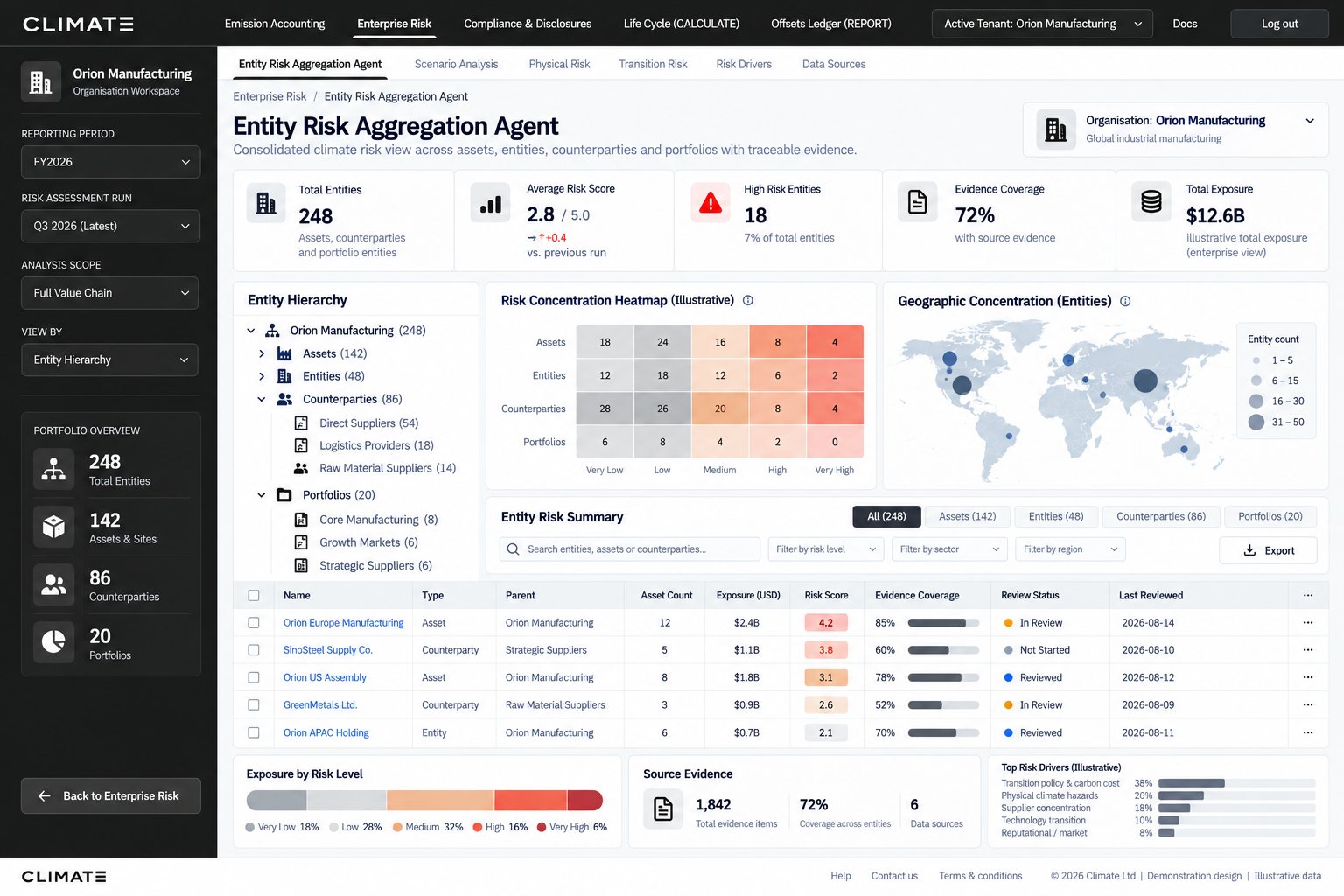
Physical Risk and Entity Risk Aggregation
Reveal regional concentrations across the loan book.
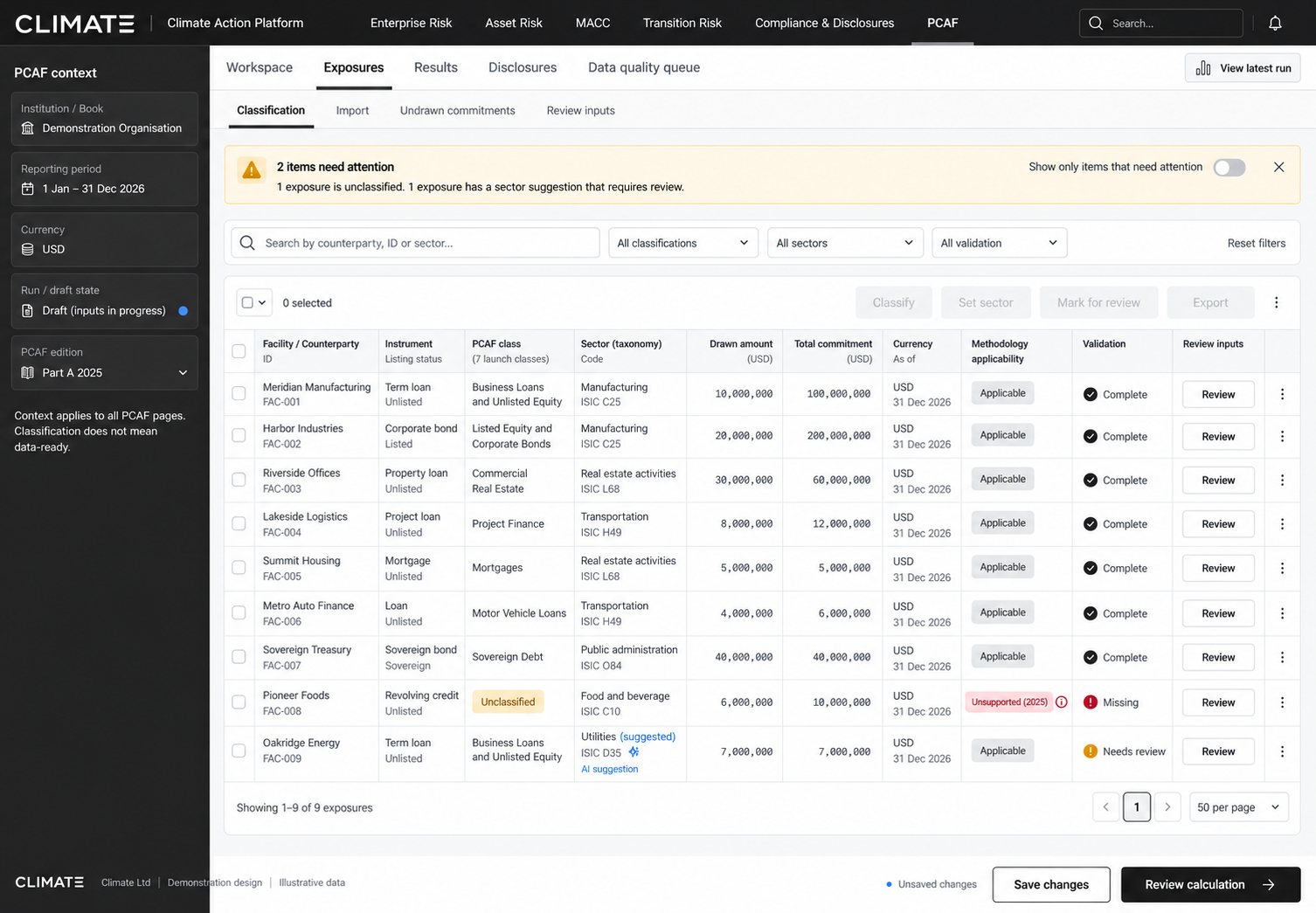
PCAF
Estimate financed emissions with data-quality transparency.
Disclosure and Copilot
Prepare reporting drafts and answer “where did this figure come from?” quickly.
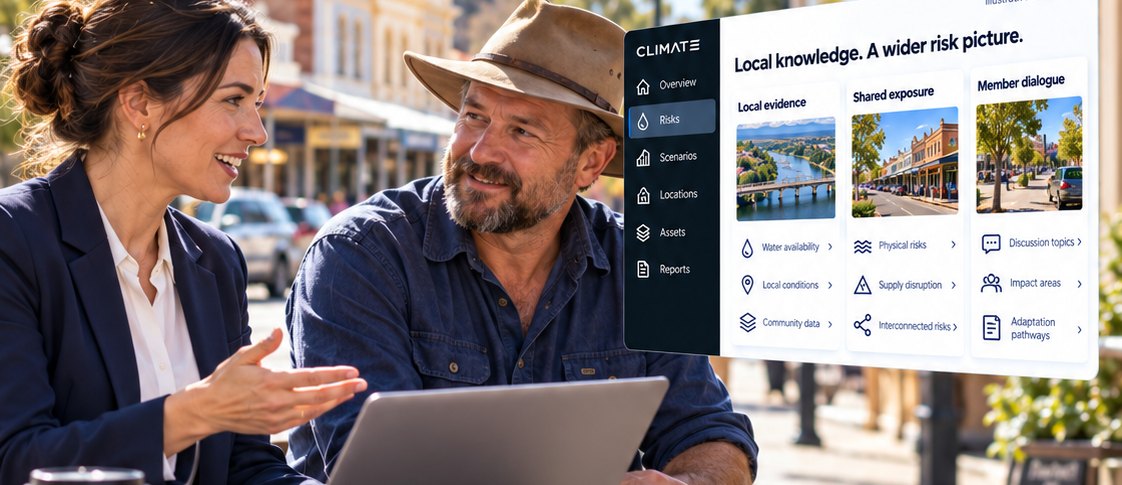
Local knowledge combined with a wider risk picture.
Start with the decision
- Where does regional hazard exposure concentrate in our book?
- What evidence do we need for governance?
- How should we engage borrowers on resilience?
- What is the simplest credible disclosure path?
One problem, one invitation
Confirm applicable regulatory guidance and reporting thresholds for your institution.
Screens used in this workflow
Pcaf Exposures
Entity Risk Aggregation
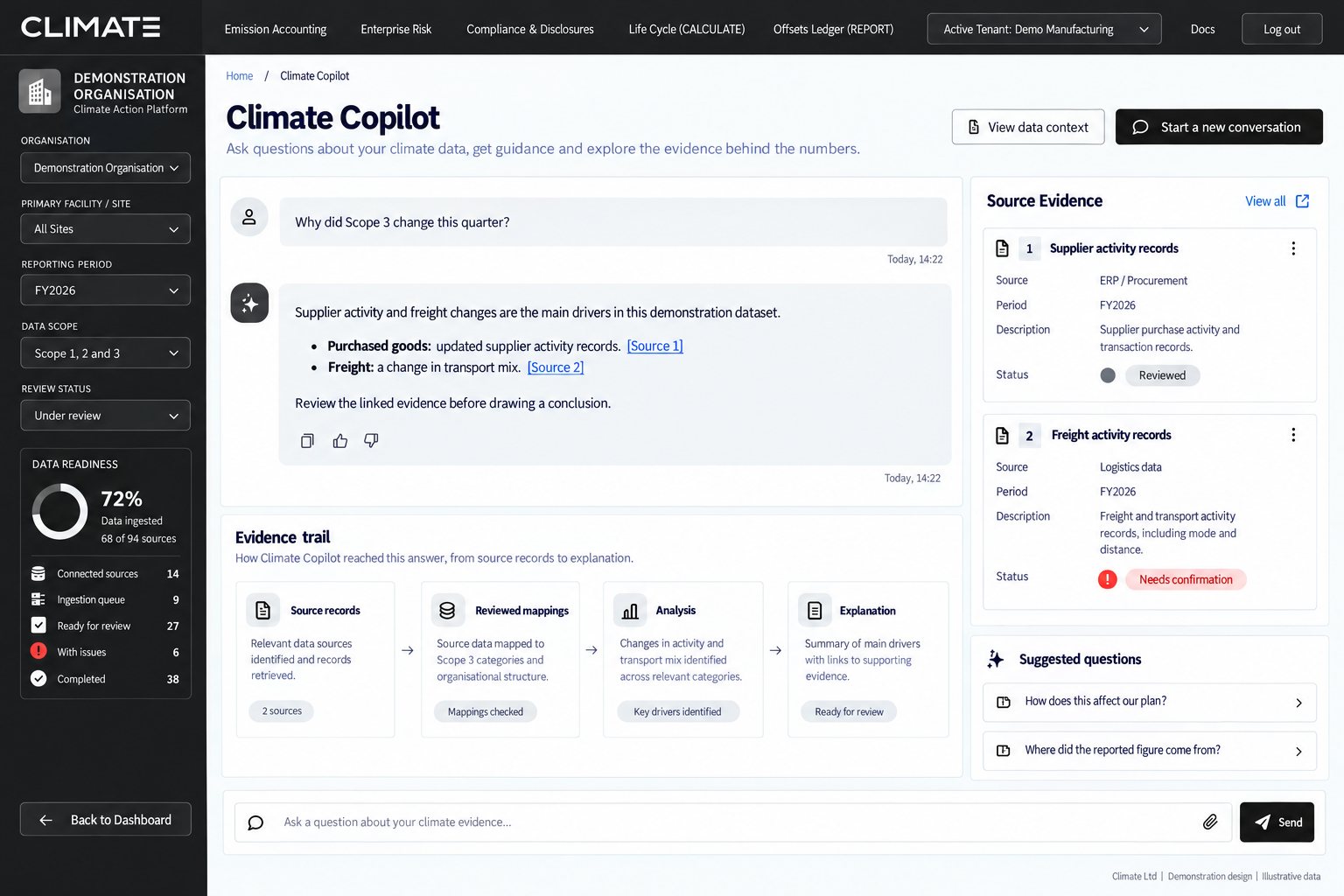
Climate Copilot
Explore neighbouring sectors

Banks
Better-informed questions and more transparent risk review.
See the benefits →
Superannuation and pension investors
A climate lens for long investment horizons.
See the benefits →
Asset managers and institutional investors
More coherent portfolio discussions and targeted engagement.
See the benefits →Bring one mutual banks and credit unions question. We will show the workflow.
Start with an emissions inventory, a physical-risk assessment, a PCAF portfolio, a TNFD scope, a water-risk question, a disclosure programme or a client advisory workflow.
Request a demo