
Connect site risks with operational resilience.
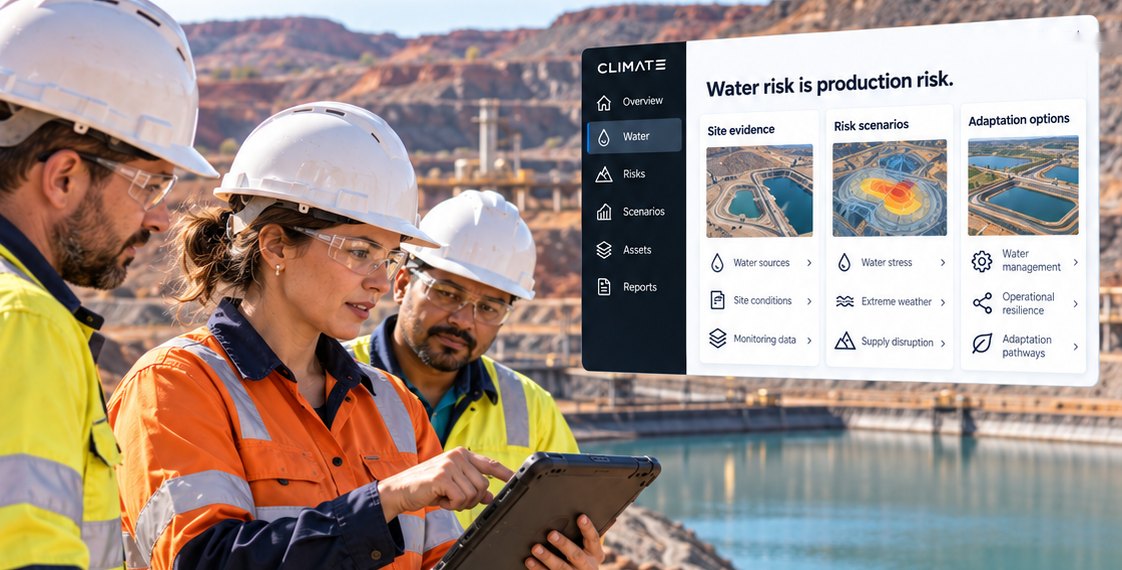
Water, heat, energy and supply disruption have to be considered together. Climate Ltd combines site evidence, exposure assessment and scenario comparisons so mine operators and their advisers can turn climate risk into planning, investment and reporting conversations.
What makes this sector hard
A water constraint can become a throughput constraint, and heat or wildfire can affect access, power and contractors without damaging the orebody.
Fleet and power transition cases built on average conditions can miss site realities such as winter operation or remote supply.
Site risk registers rarely connect hazards to margin, production assumptions and cash flow.
The agents that matter for mining
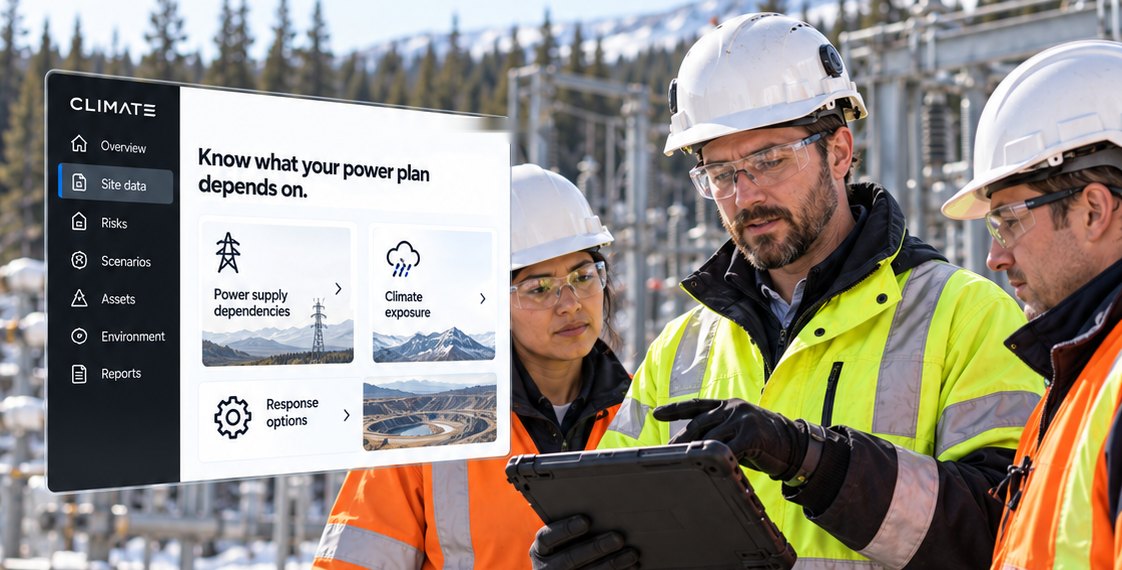
Physical Risk
Assess heat, flood, drought, wildfire and cyclone exposure at site, haul-route and infrastructure level under selected pathways.
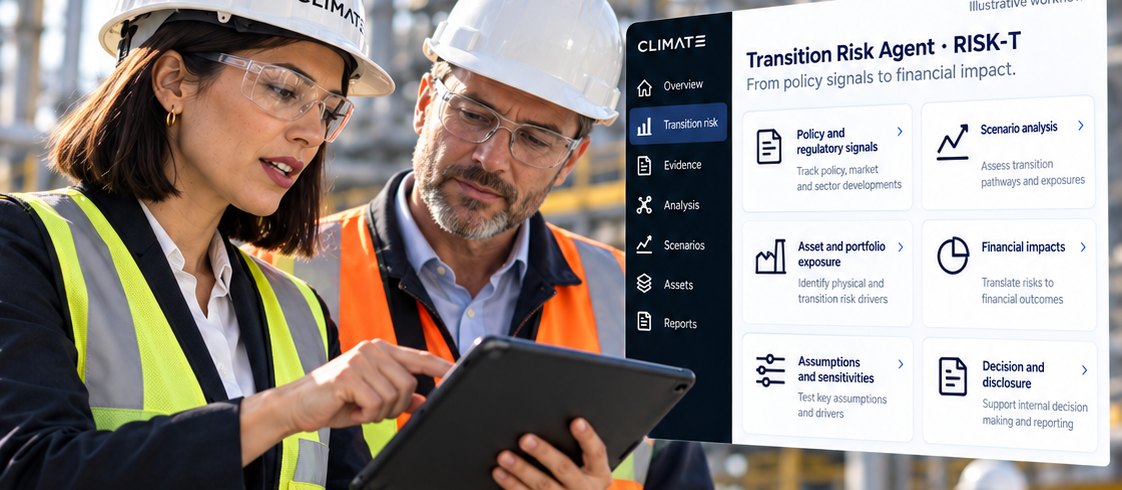
Transition Risk and Abatement
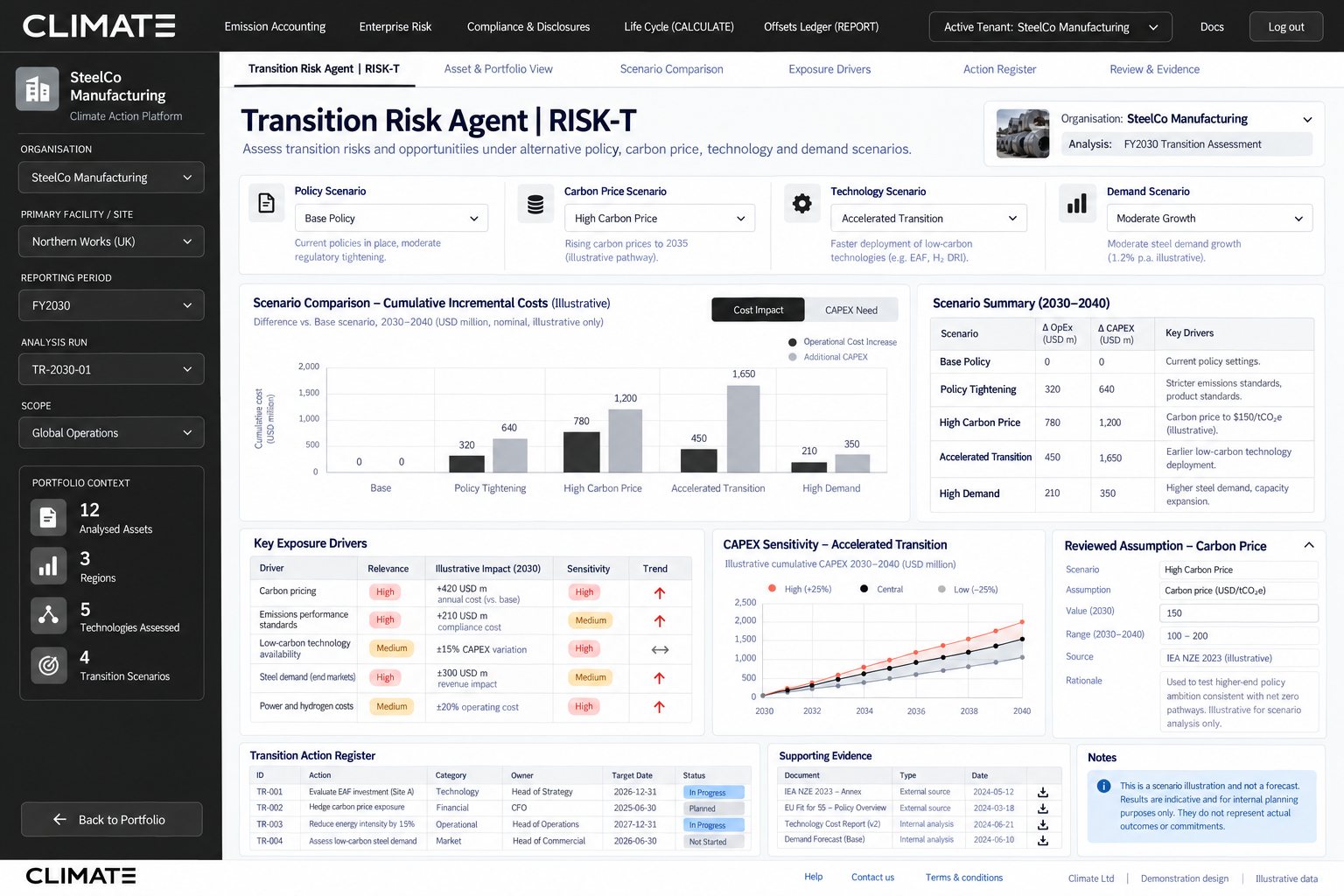
Test fleet, energy and process options against carbon-price, fuel and power assumptions, with winter or low-availability scenarios stated explicitly.
Adaptation and Financial Impact
Compare resilience measures with modelled avoided loss and show consequences for operating cost, production assumptions and CapEx.
Disclosure
Prepare evidence-linked climate reporting, including AASB S2 where in scope, from the same site-level records.
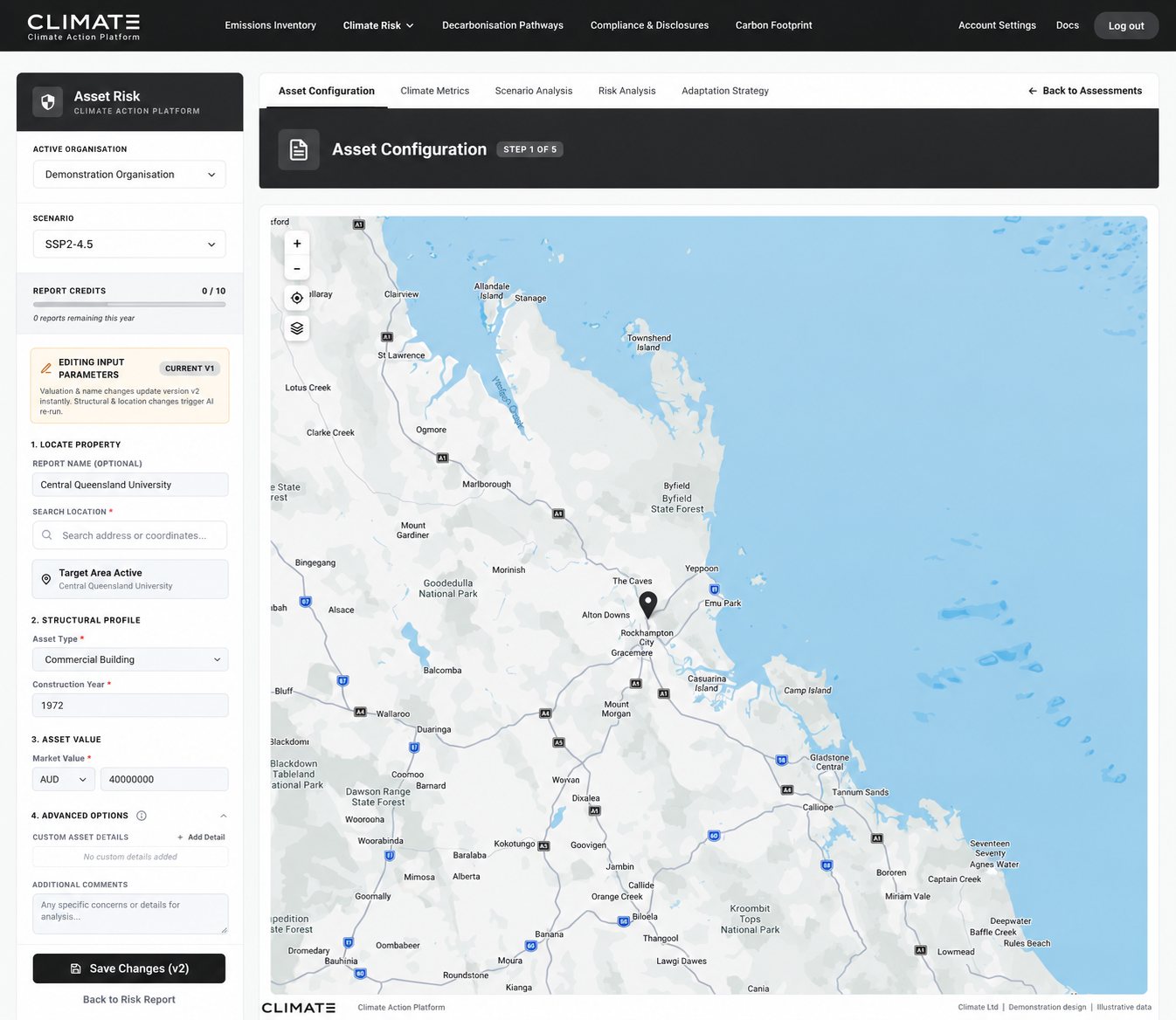
A clearer basis for operational and adaptation priorities.
Start with the decision
- Which water, heat or wildfire dependencies could affect production, cost or the next investment decision?
- What does a lower-emissions haulage or power strategy cost under realistic operating conditions?
- Which site should receive the next resilience or decarbonisation dollar?
- What evidence will buyers, financiers and regulators ask for?
One problem, one invitation
Applicability of AASB S2 depends on the entity and reporting thresholds. Engineering assessment and site validation are needed before committing capital to resilience works.
Mining themes the platform is used to explore
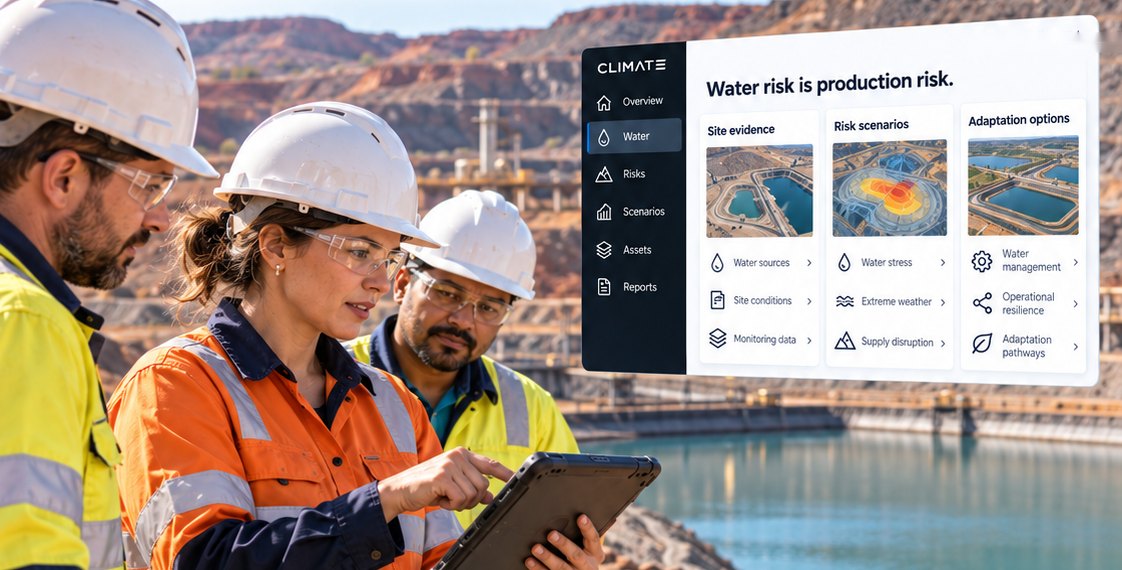
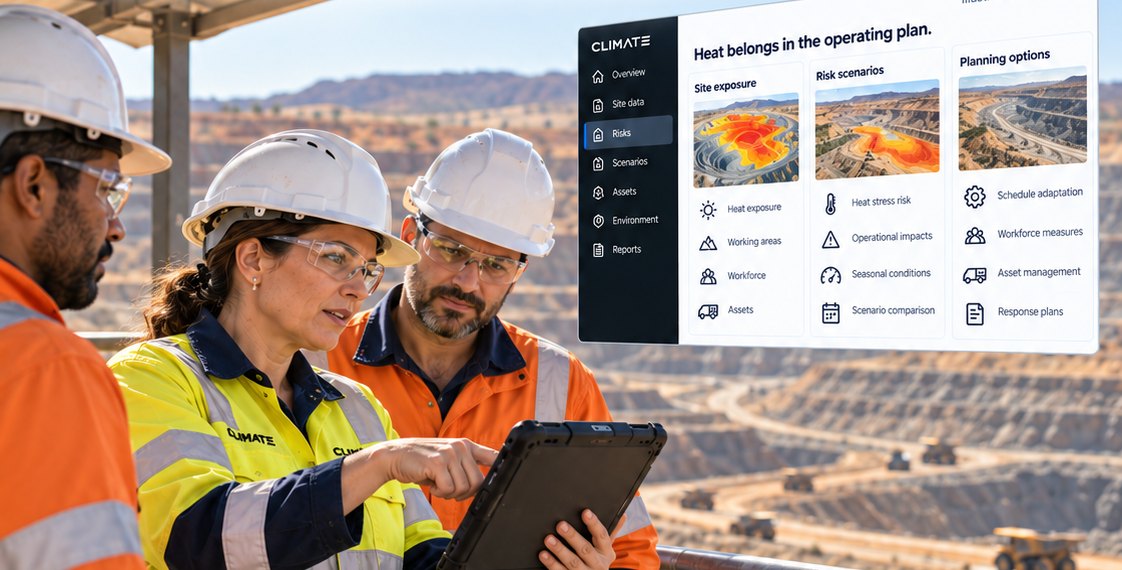
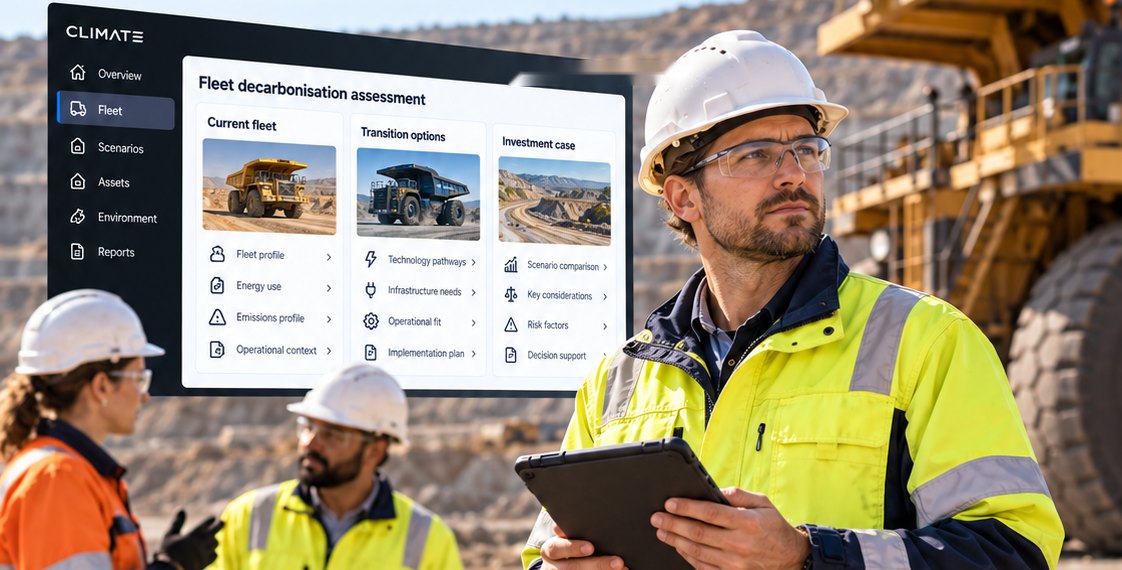
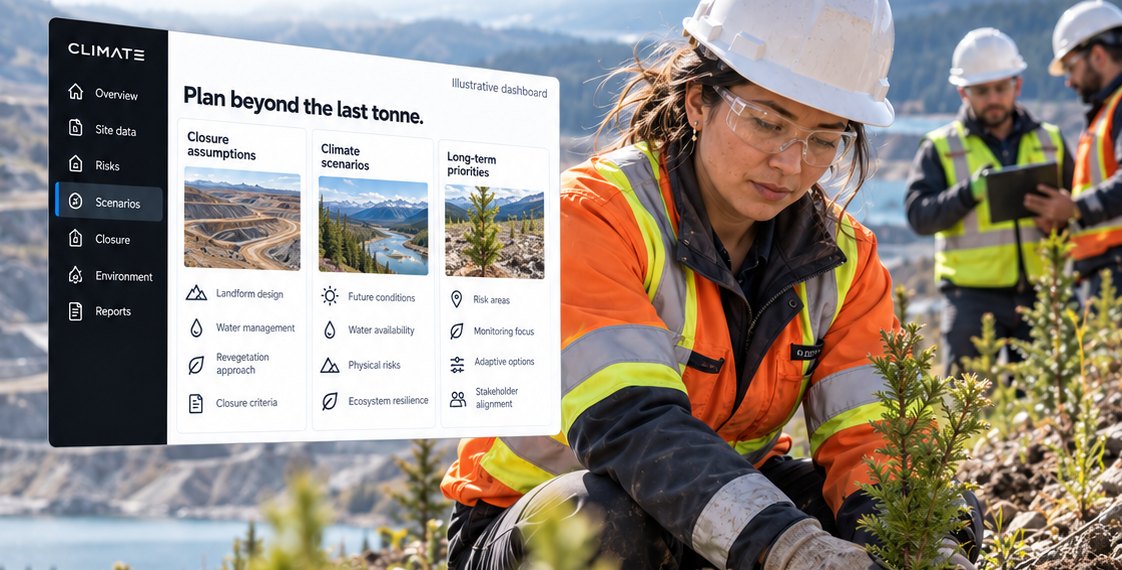
Screens used in this workflow
Physical Risk
Transition Risk
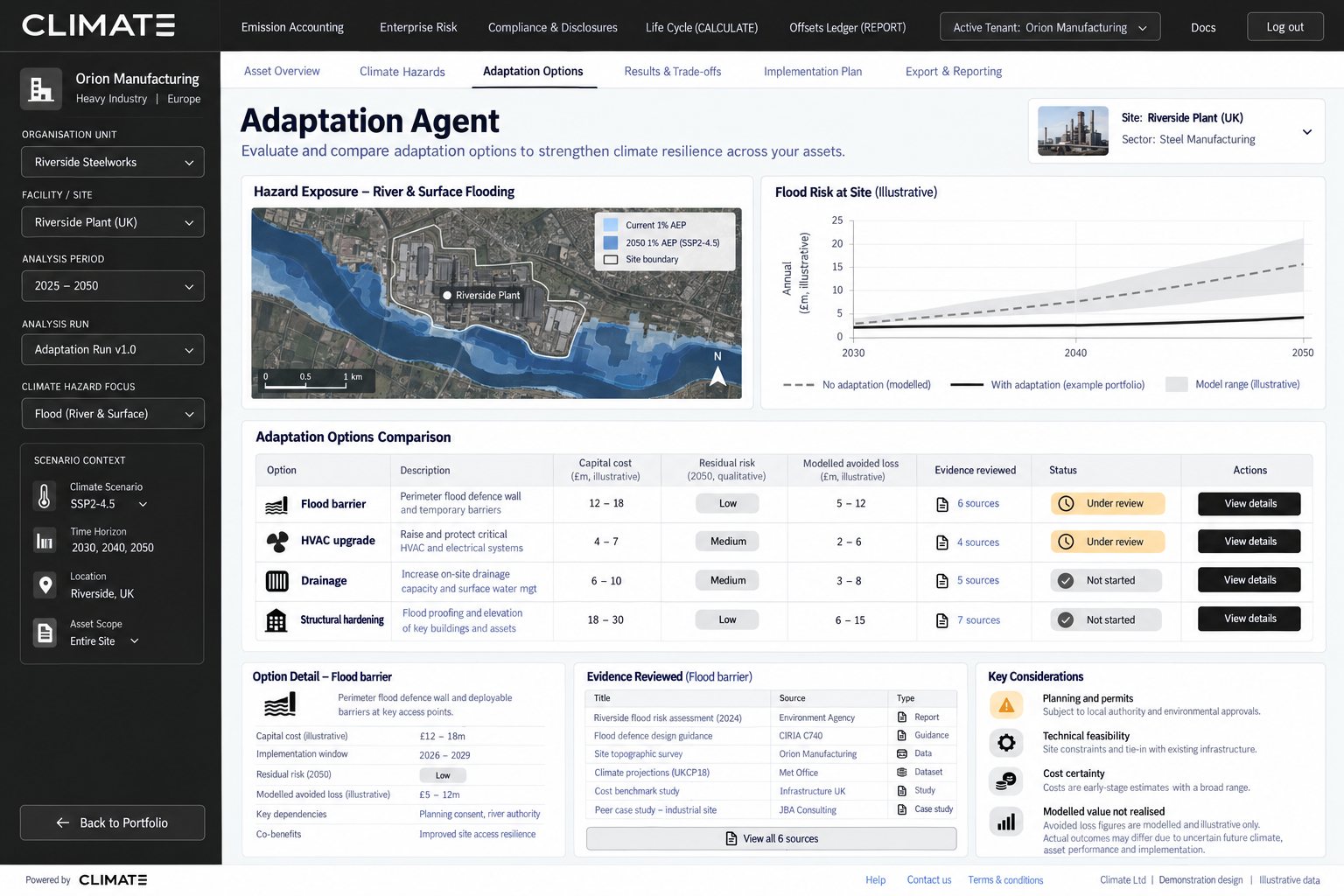
Adaptation
Bring one mining question. We will show the workflow.
Start with an emissions inventory, a physical-risk assessment, a PCAF portfolio, a TNFD scope, a water-risk question, a disclosure programme or a client advisory workflow.
Request a demo