
Make climate risk part of the credit conversation.
Borrower and collateral evidence is often disconnected from climate scenarios. Climate Ltd brings borrower information, asset exposure and scenario assumptions into expert-led credit-risk and portfolio discussions, with financed-emissions evidence on the same data spine.
What makes this sector hard
A property valuation is a point-in-time view; a loan runs for years under changing flood, heat, wildfire and energy-cost conditions.
A loan book diversified by borrower can still share exposure to the same geography, infrastructure or sector transition.
Financed-emissions figures are hard to defend without source, method, boundary and assumptions.
The agents that matter for banks
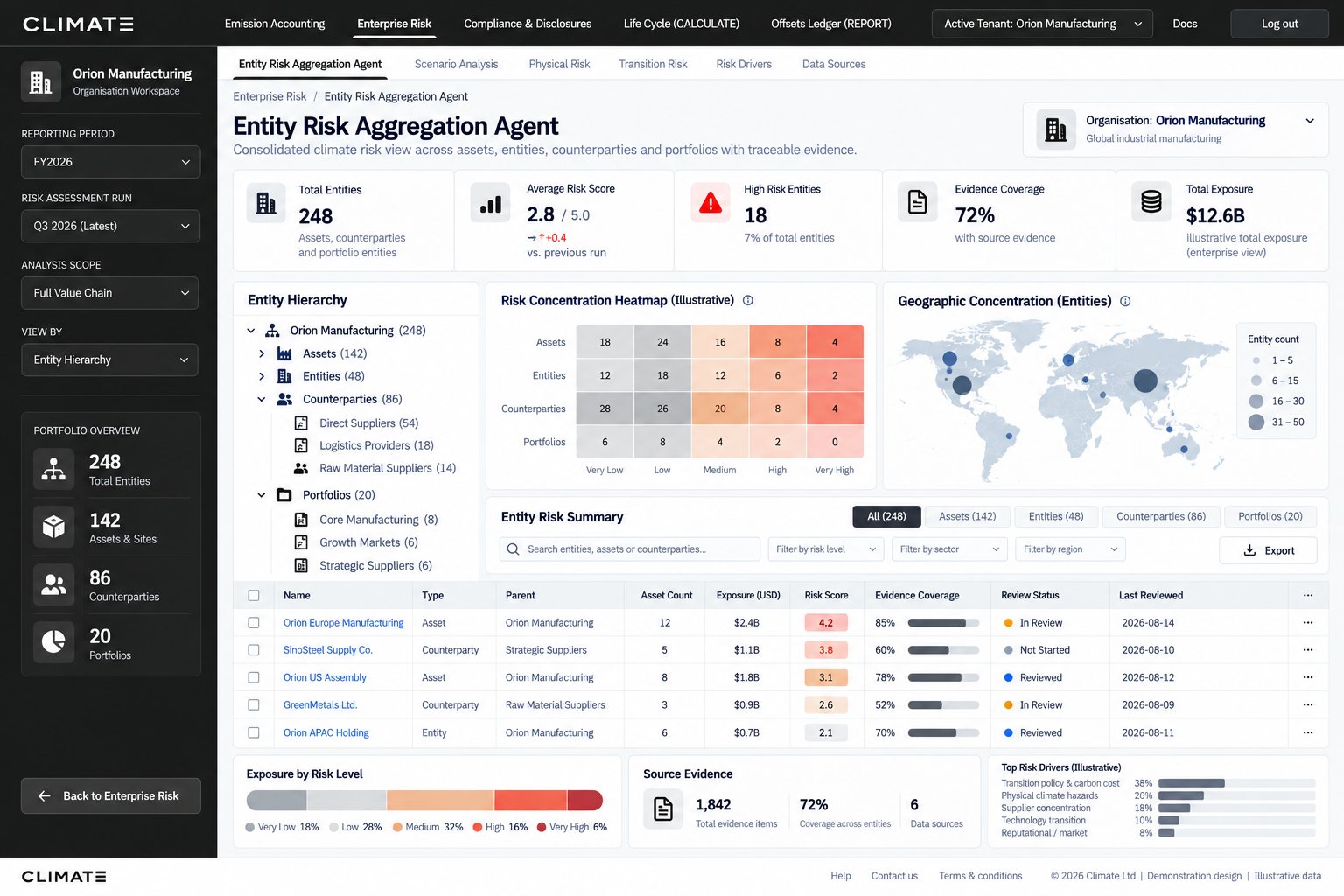
Entity Risk Aggregation
Roll asset and borrower exposure up to counterparty, sector and portfolio views to reveal concentrations.
Physical and Transition Risk
Assess collateral hazards and connect transition pressures to borrower cash flow.
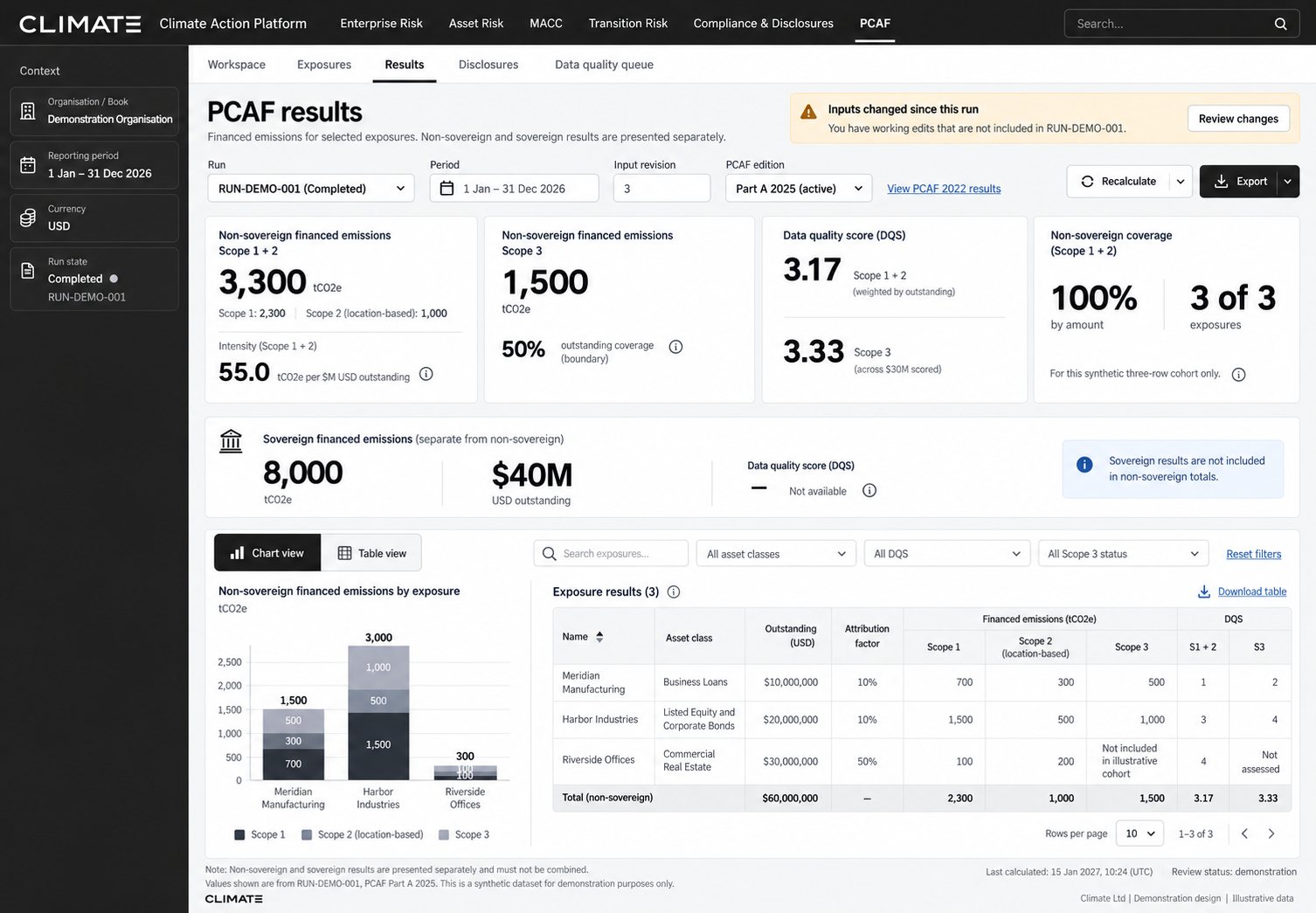
PCAF
Calculate financed emissions with attribution inputs, data-quality scores and coverage on view.
Financial Impact and Disclosure
Show climate value-at-risk and prepare evidence-linked disclosure for governance and regulators.
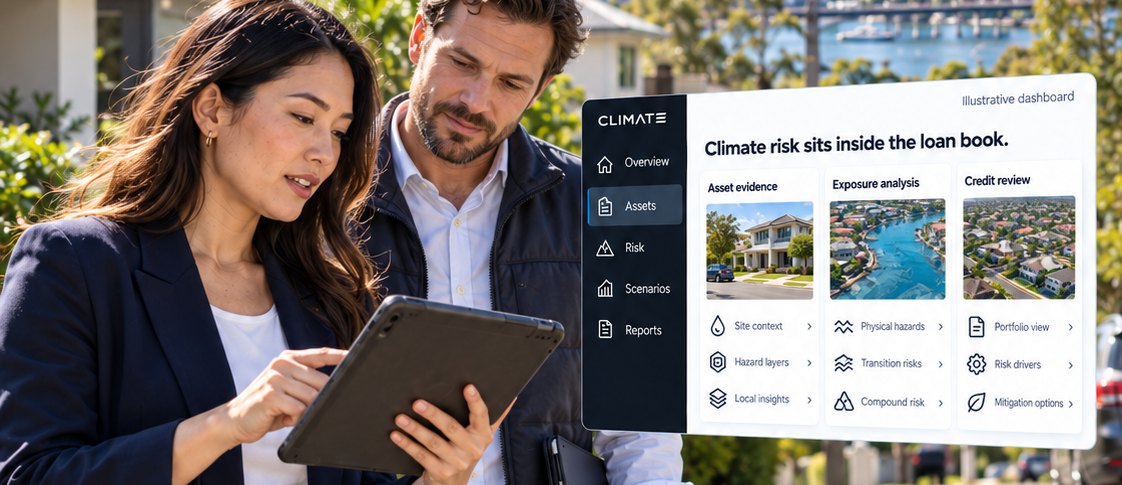
Better-informed questions and more transparent risk review.
Start with the decision
- Which parts of the loan book share the same hazard or transition exposure?
- How could a borrower’s cash flow respond to energy-cost and policy changes?
- How good is the data behind our financed-emissions figures?
- What do we need to evidence for governance and supervisors?
One problem, one invitation
APRA CPG 229 provides guidance on climate-related financial risks within existing risk governance; OSFI B-15 is relevant for Canadian federally regulated institutions. Financed emissions are not themselves a credit-risk measure.
Banking themes the platform supports
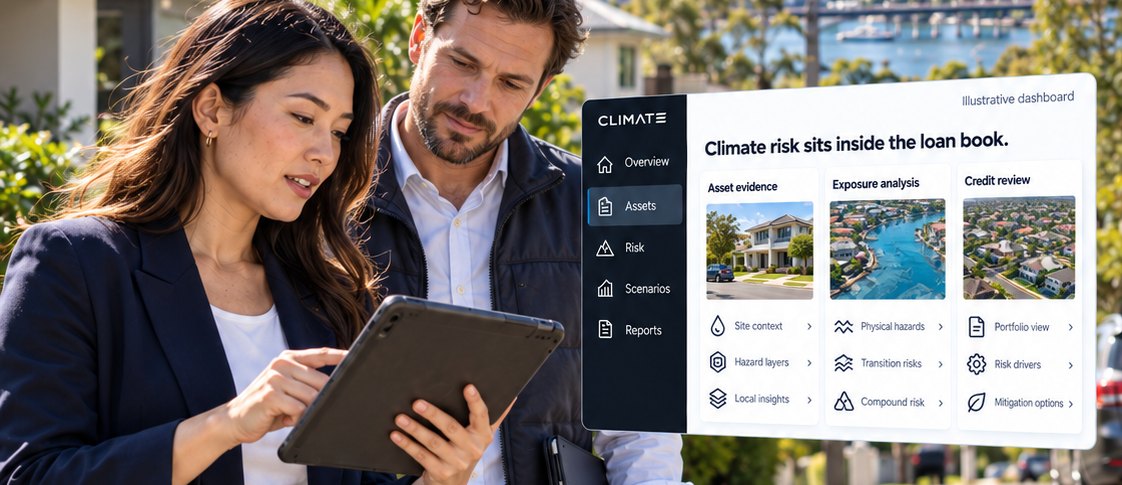
Screens used in this workflow
Entity Risk Aggregation
Pcaf Results
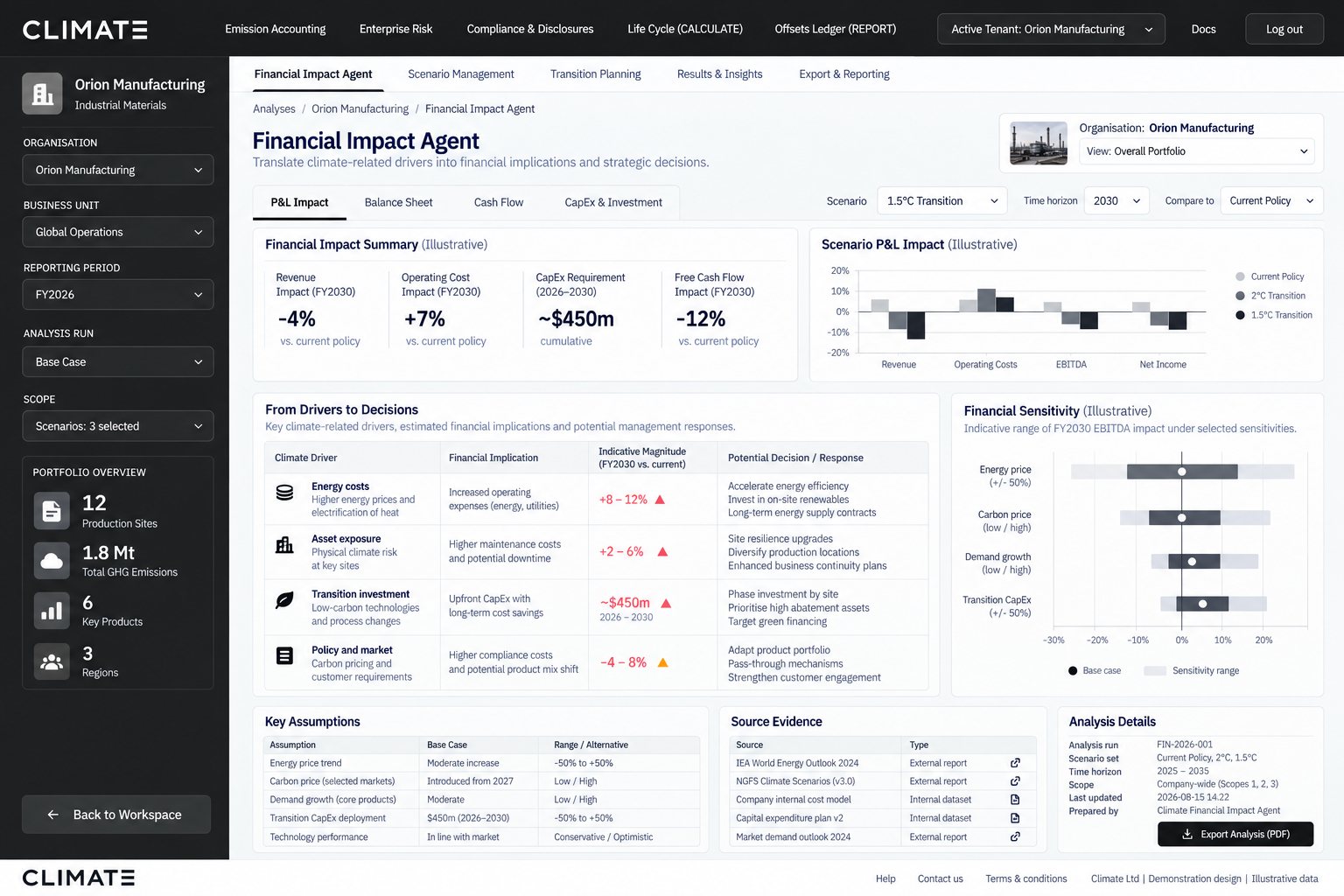
Financial Impact
Explore neighbouring sectors
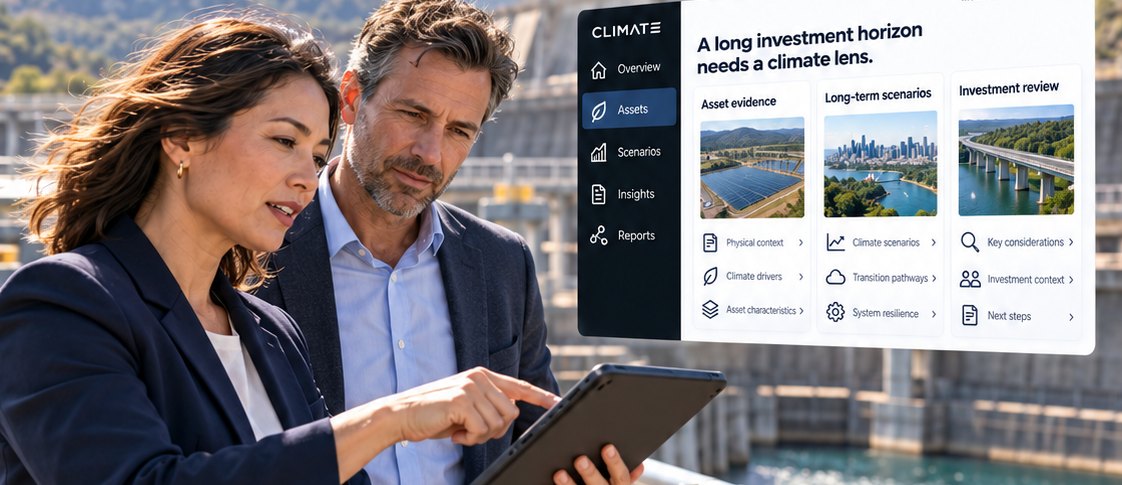
Superannuation and pension investors
A climate lens for long investment horizons.
See the benefits →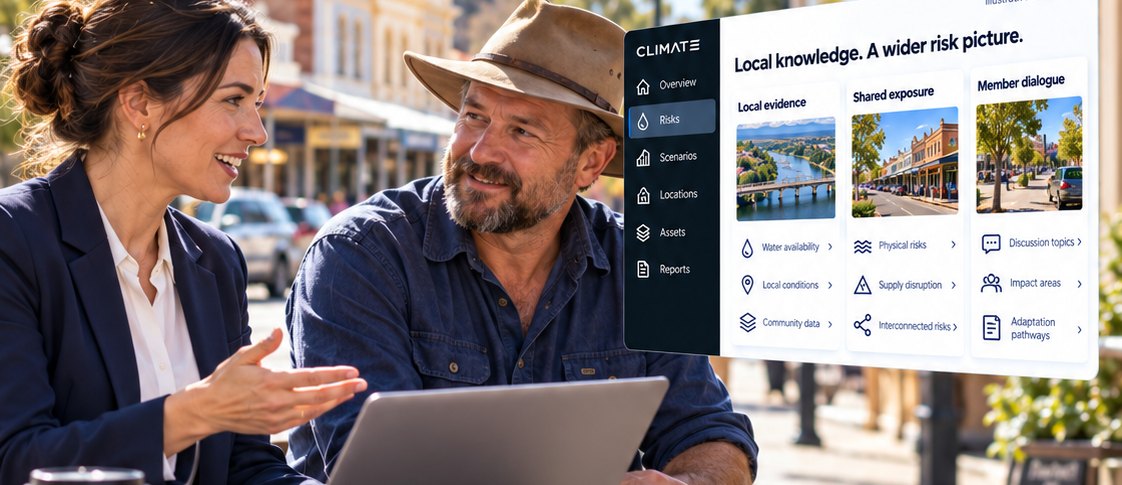
Mutual banks and credit unions
Local knowledge combined with a wider risk picture.
See the benefits →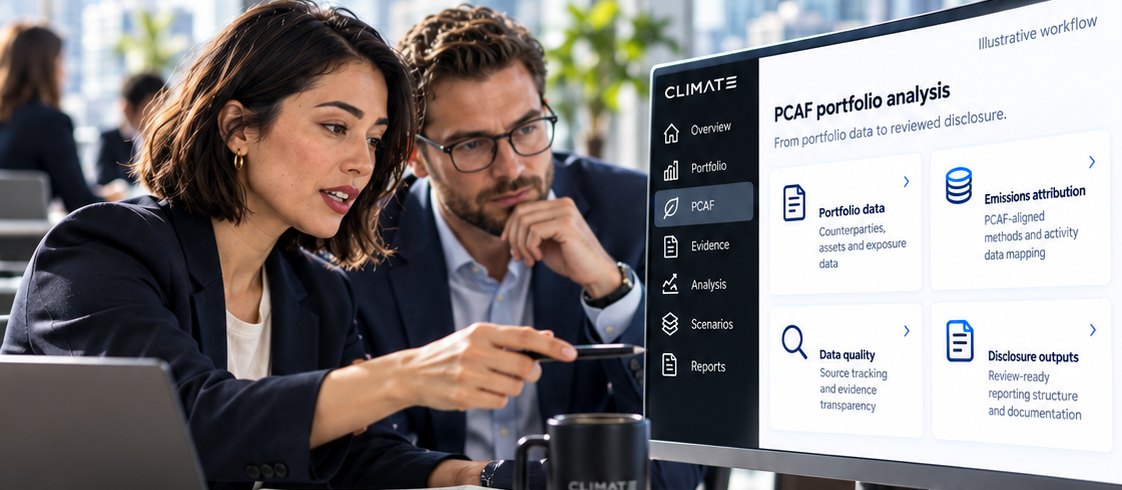
Asset managers and institutional investors
More coherent portfolio discussions and targeted engagement.
See the benefits →Bring one banks question. We will show the workflow.
Start with an emissions inventory, a physical-risk assessment, a PCAF portfolio, a TNFD scope, a water-risk question, a disclosure programme or a client advisory workflow.
Request a demo