
Climate evidence, risk and disclosure on one connected data spine.
Connected AI agents unify emissions, climate risk, decarbonisation, life cycle, nature, water and disclosure workflows, turning science-based data into traceable evidence for decisions, finance and reporting.
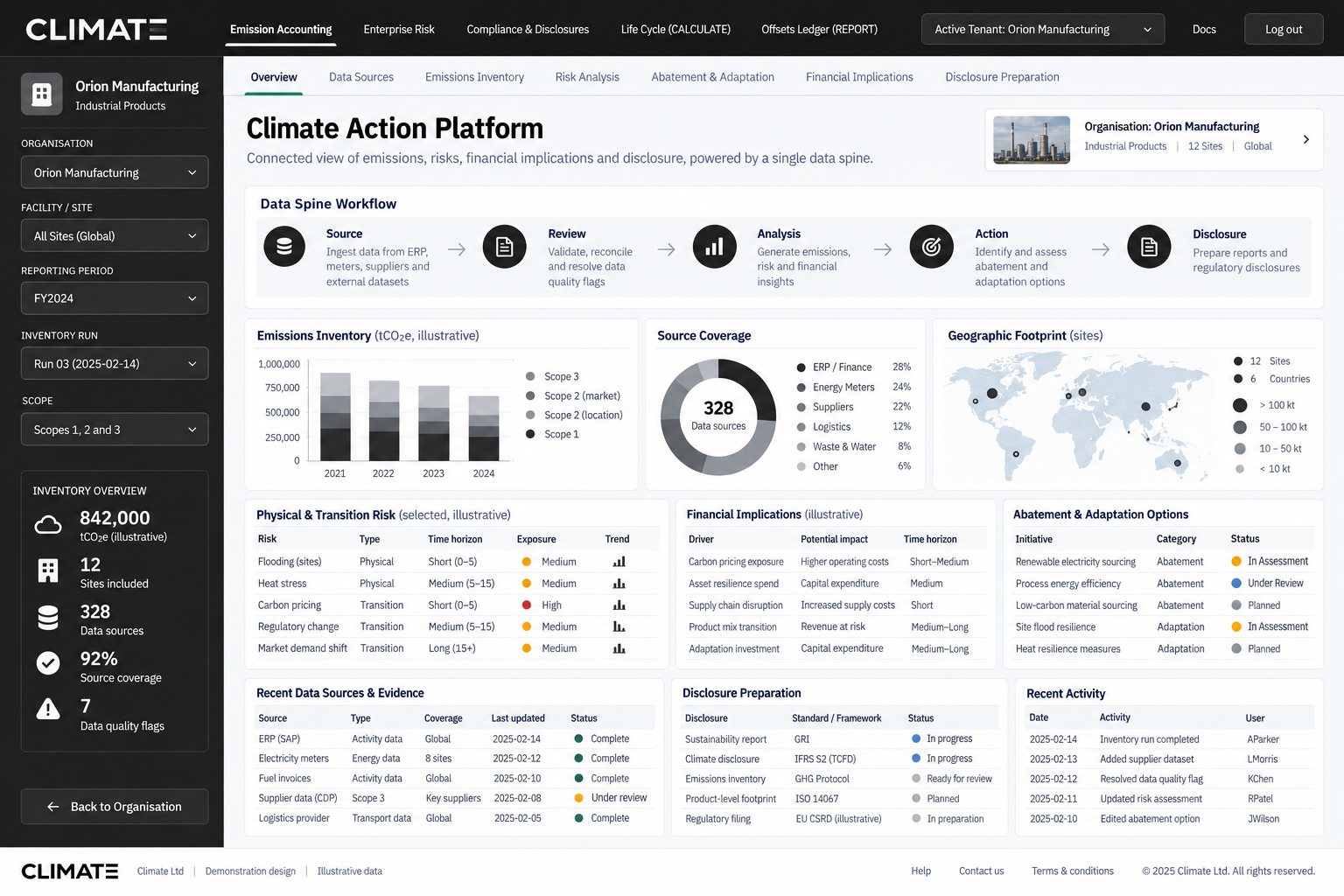
One platform. Connected climate work.
Most climate programmes still separate accounting, risk, planning and disclosure. Climate Ltd is built around a shared evidence model, so approved data can support many decisions without rebuilding the chain every cycle.
Connect
ERP, finance, utilities, meters, suppliers, asset registers, files and external climate data.
Account
Scope 1, 2 and 3 emissions, product life cycle, offsets and financed emissions.
Model
Physical and transition risk, nature, water and consistent scenarios.
Decide
Financial impact, abatement, adaptation and capital choices.
Disclose
Evidence-linked, reviewable reporting across frameworks.
Real screens. Traceable answers.
Explore the modules your teams will use. Click any screen to enlarge.
One view of the whole workflow
Emissions, climate risk, financial implications and disclosure share one governed ledger, so every number can be traced back to its source.
Learn moreA single Scope 1, 2 and 3 ledger
Activity records, methods and emissions factors in one place, with reconciliation and the underlying evidence a click away.
Learn more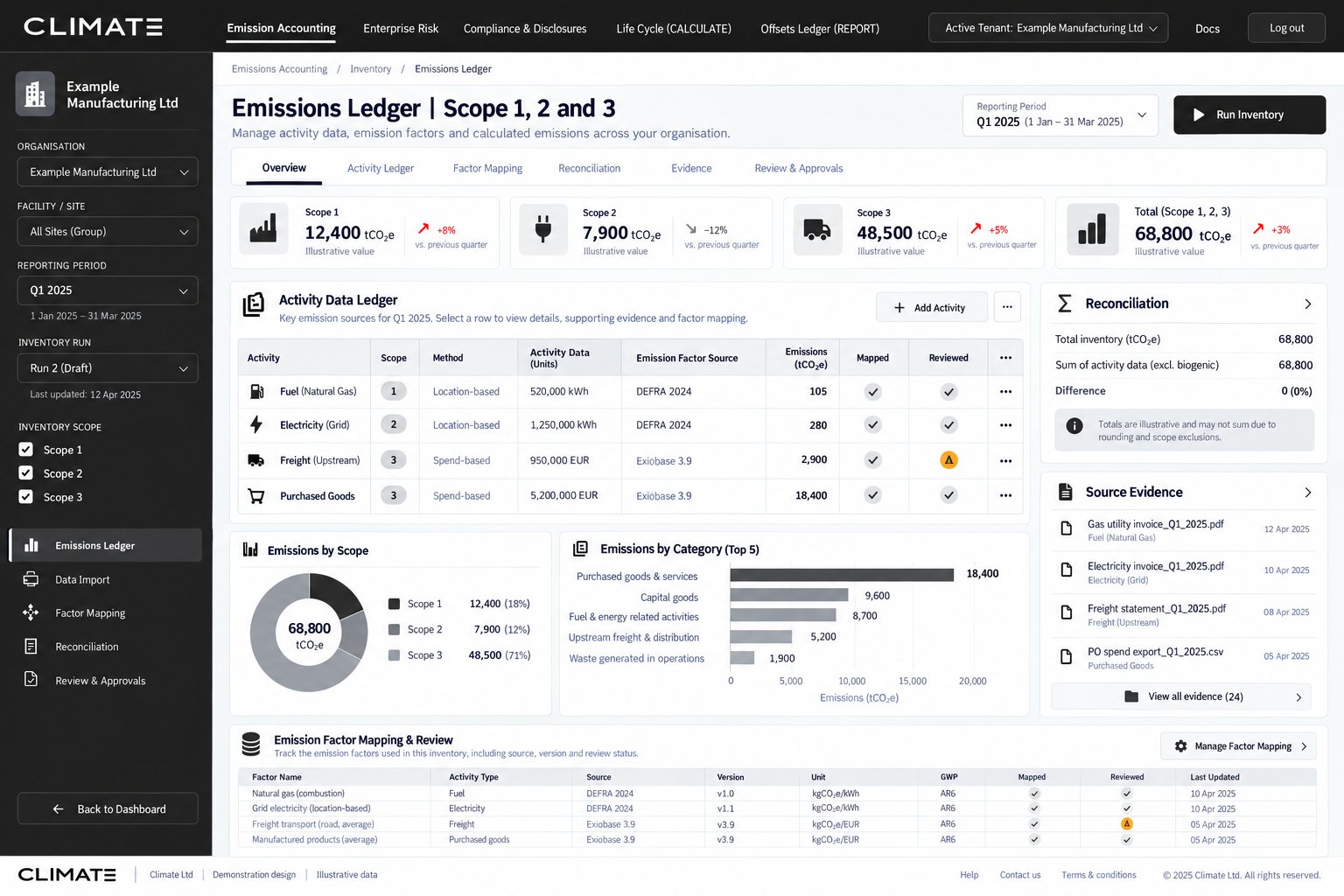
Hazards connected to assets
Physical and transition risk under shared scenarios, from site-level exposure to portfolio concentration.
Learn more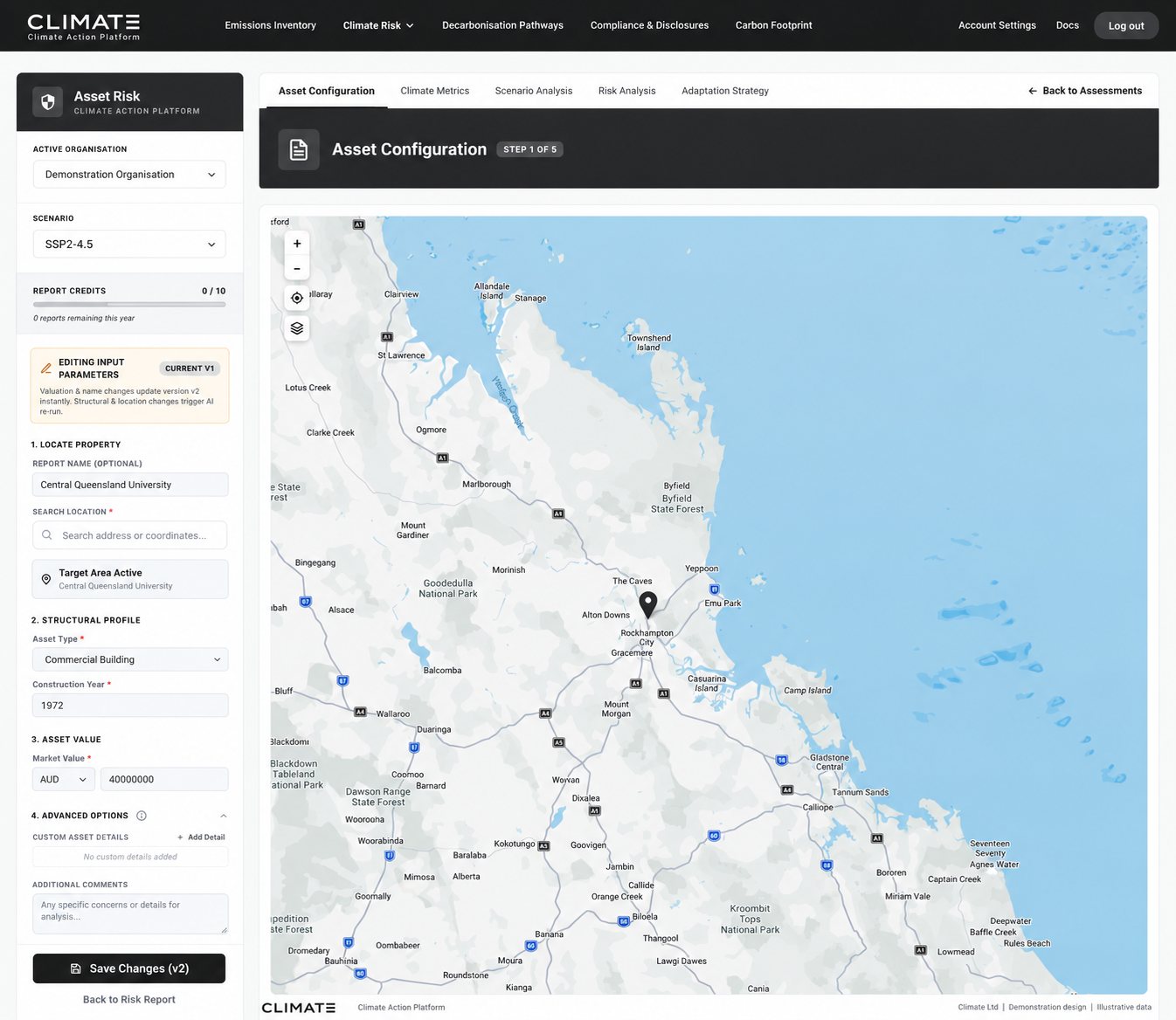
From climate findings to finance terms
Climate value-at-risk, EBITDA, cash-flow and CapEx sensitivities with the assumptions visible.
Learn more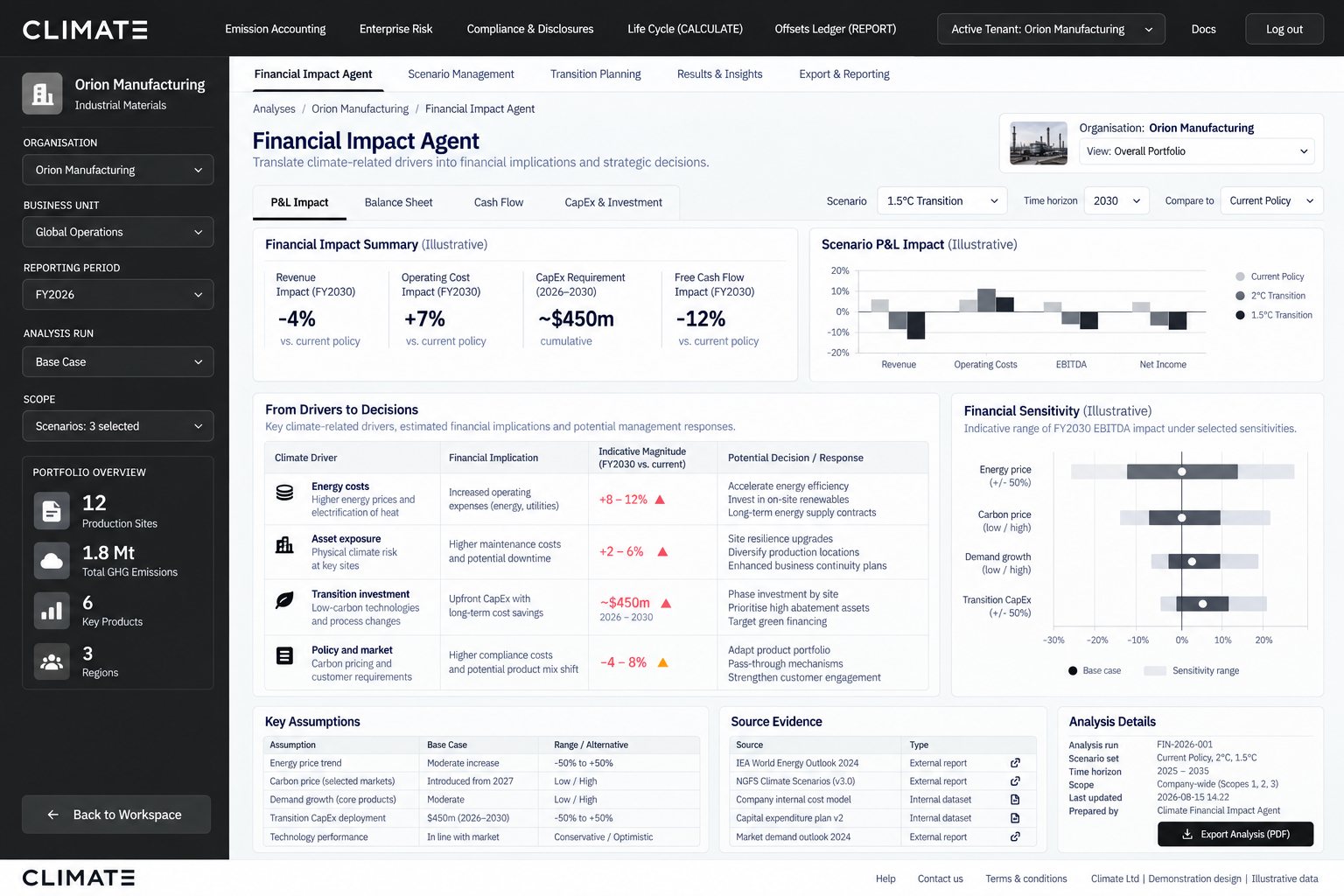
Reporting drafts linked to evidence
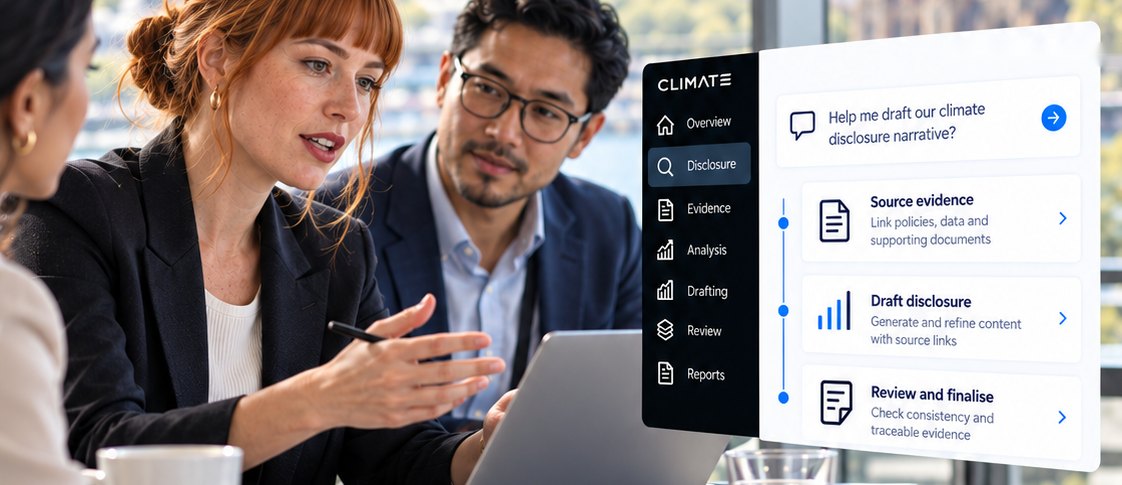
Map shared records to IFRS S1/S2, AASB S2, ESRS, TCFD and CDP structures, with readiness checks throughout the year.
Learn more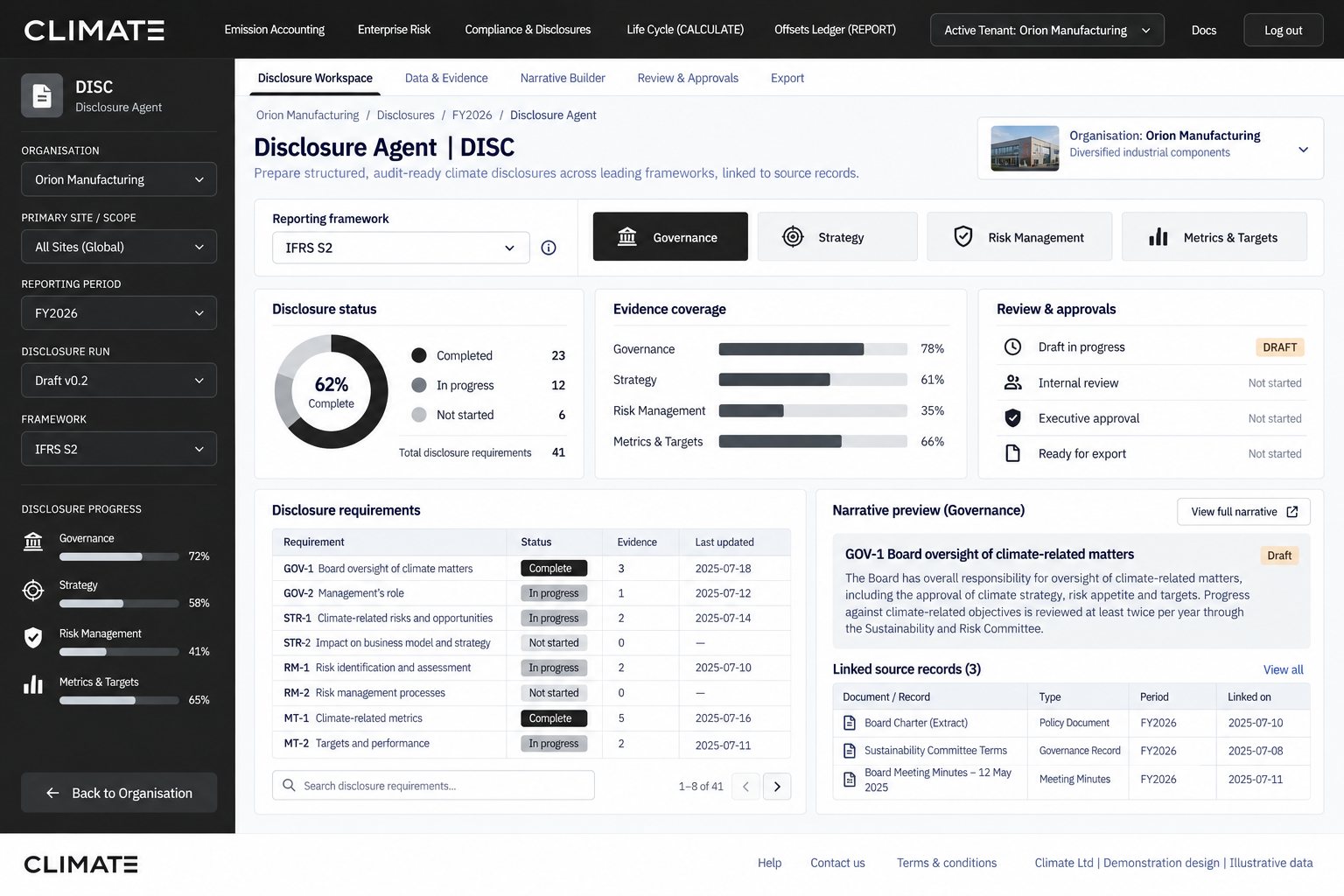
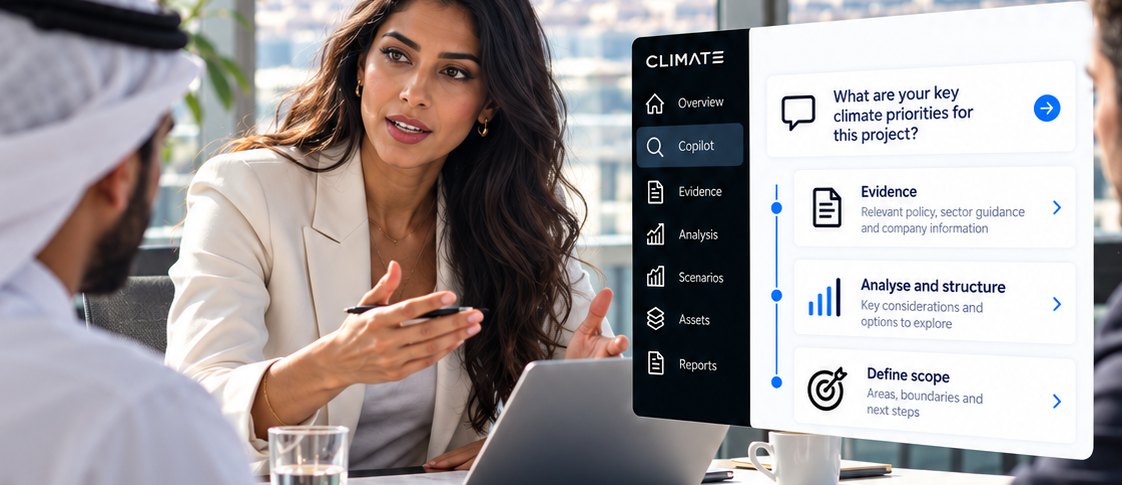
Ask. Then inspect the source.
Plain-language questions answered with cited records, mappings and analysis steps.
Learn more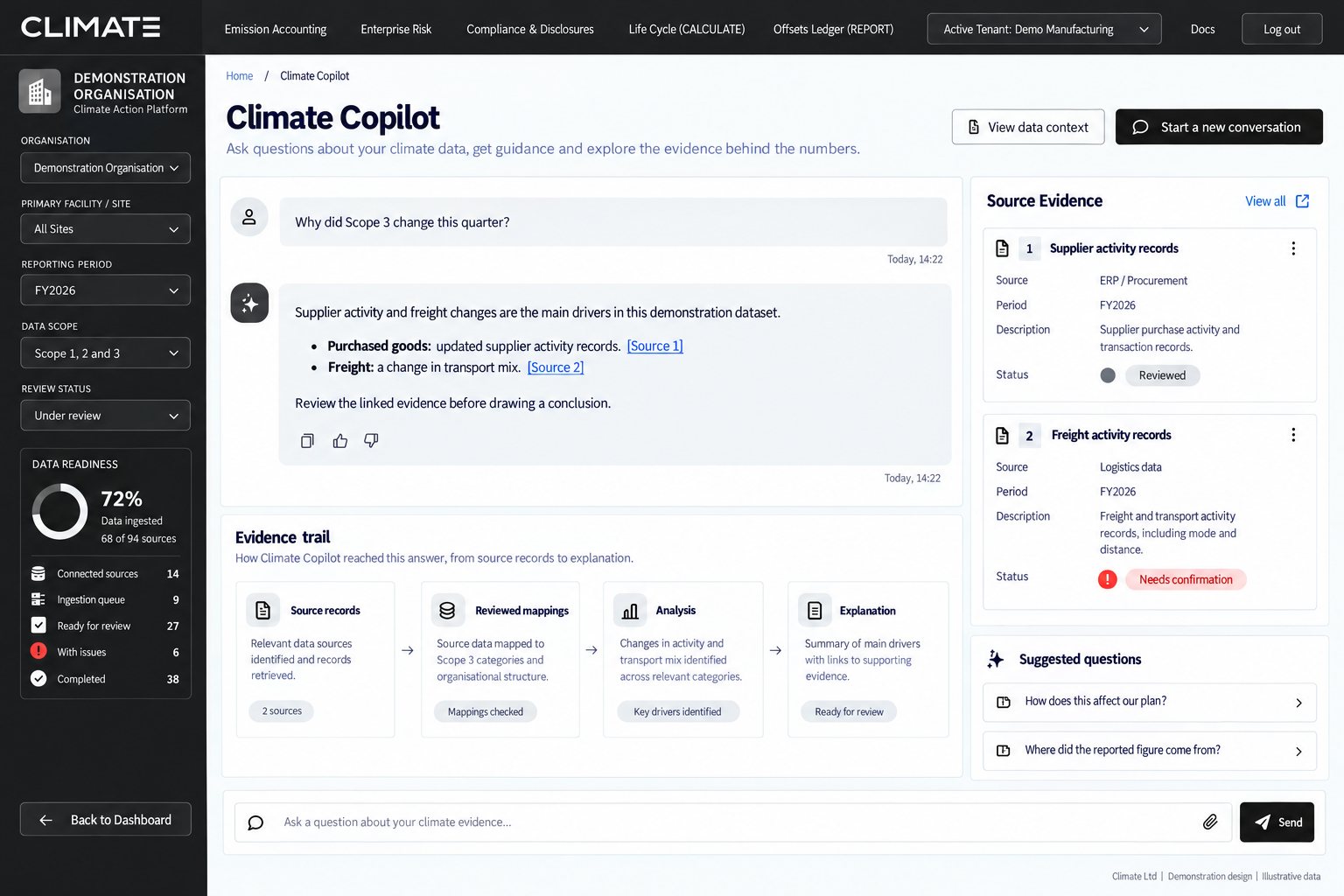
Each agent owns one job. All share the same evidence.
Agents propose; authorised people confirm. The roster is extensible and includes dedicated PCAF, TNFD and Water capability.
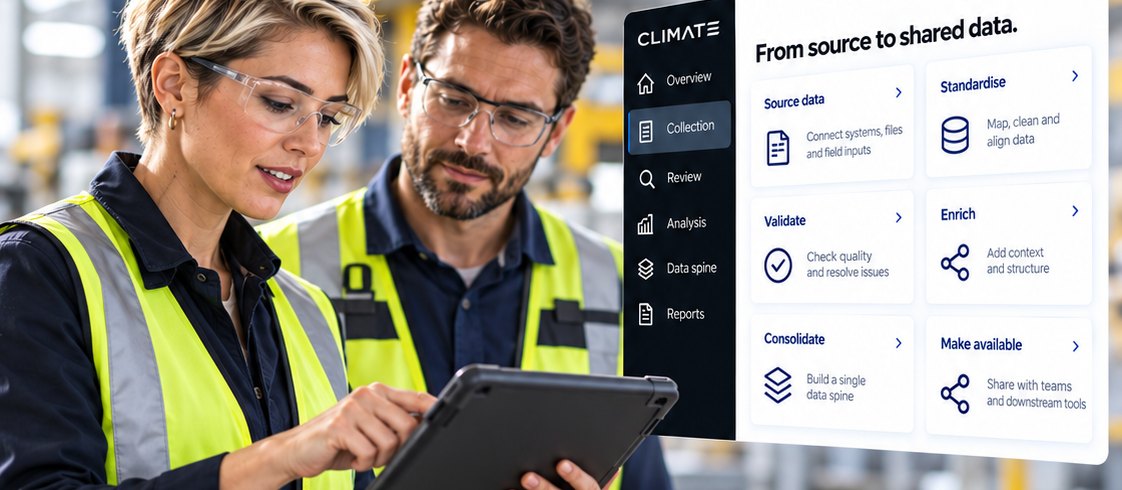
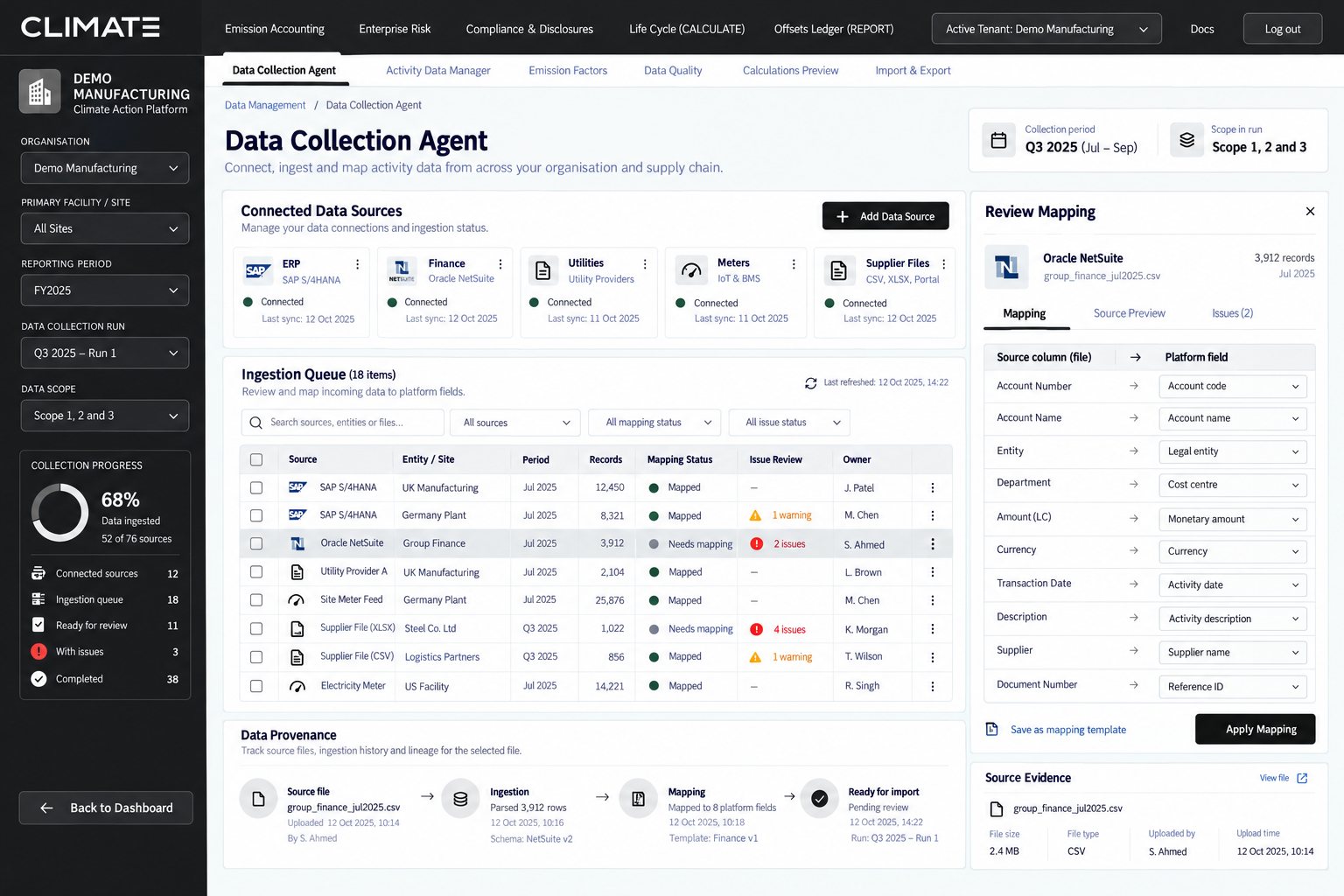
Data Collection
Connect the records once
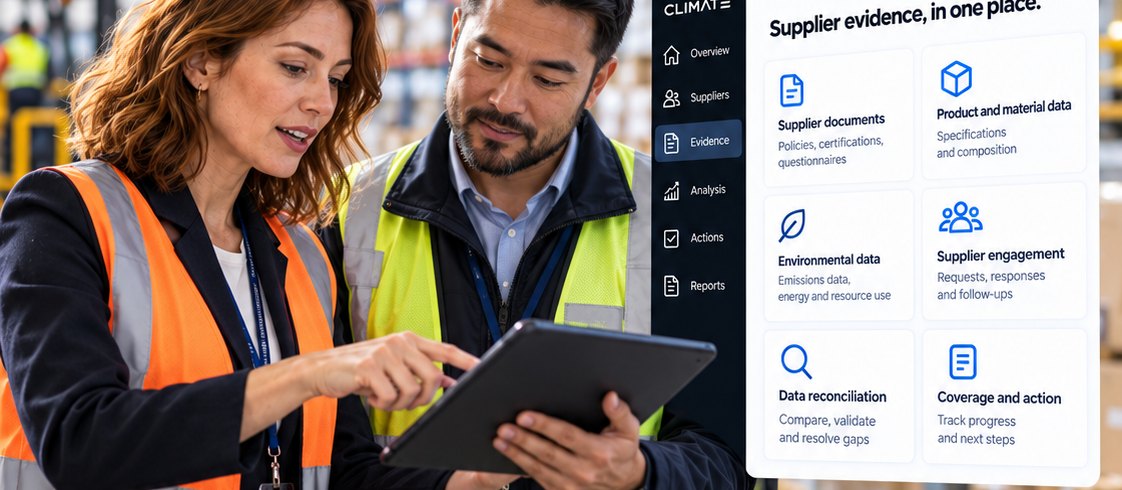
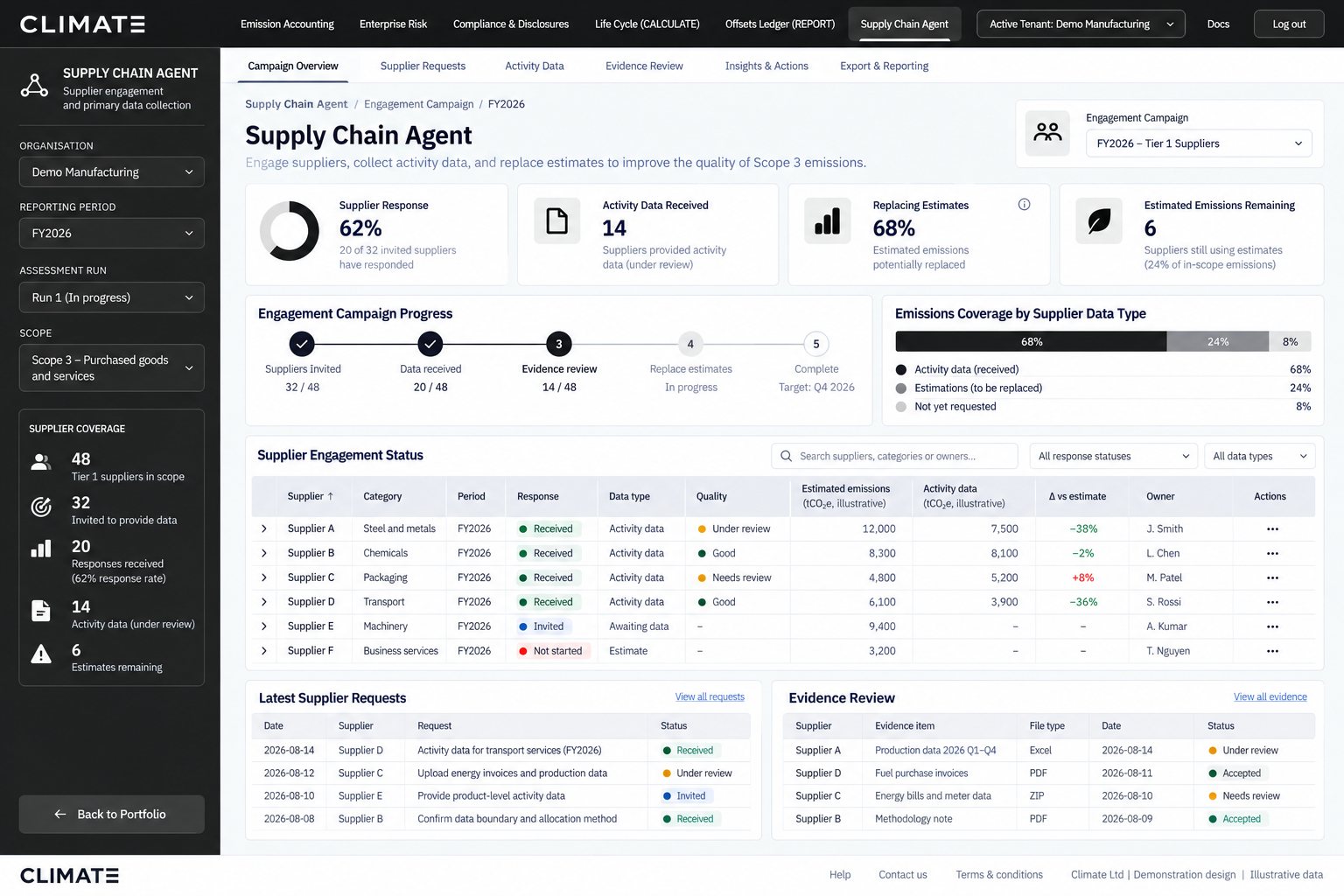
Supply Chain
Improve evidence across the value chain
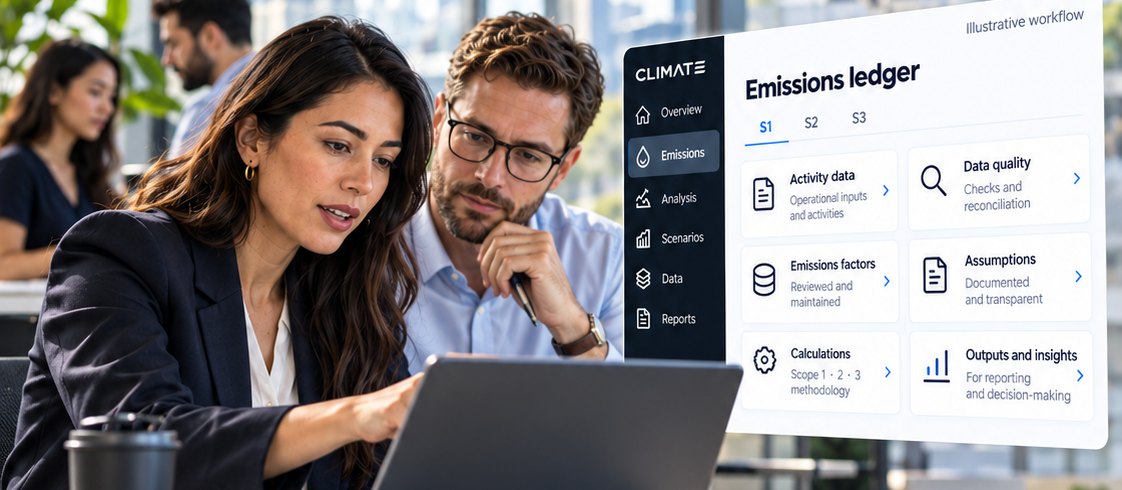
Emissions Ledger
Maintain one emissions inventory
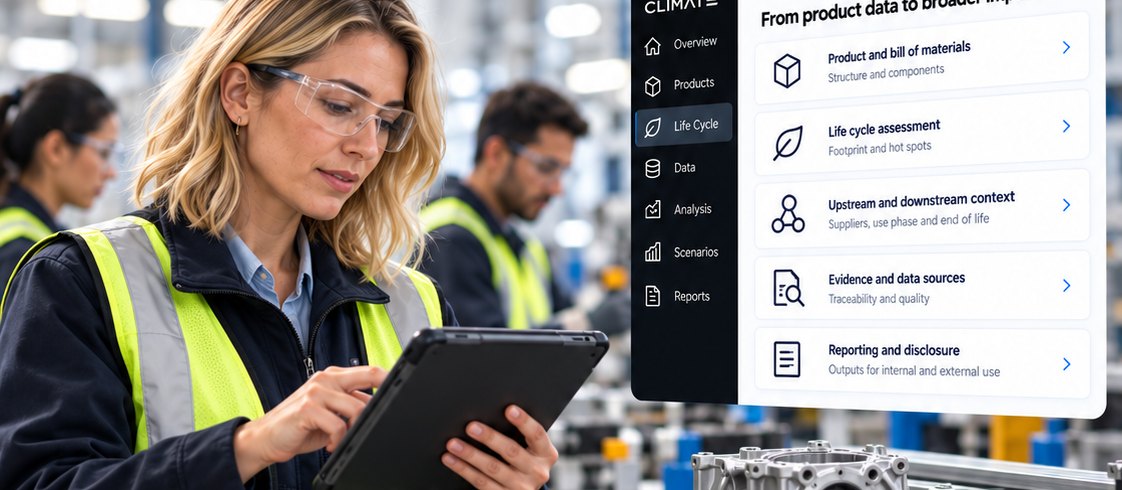
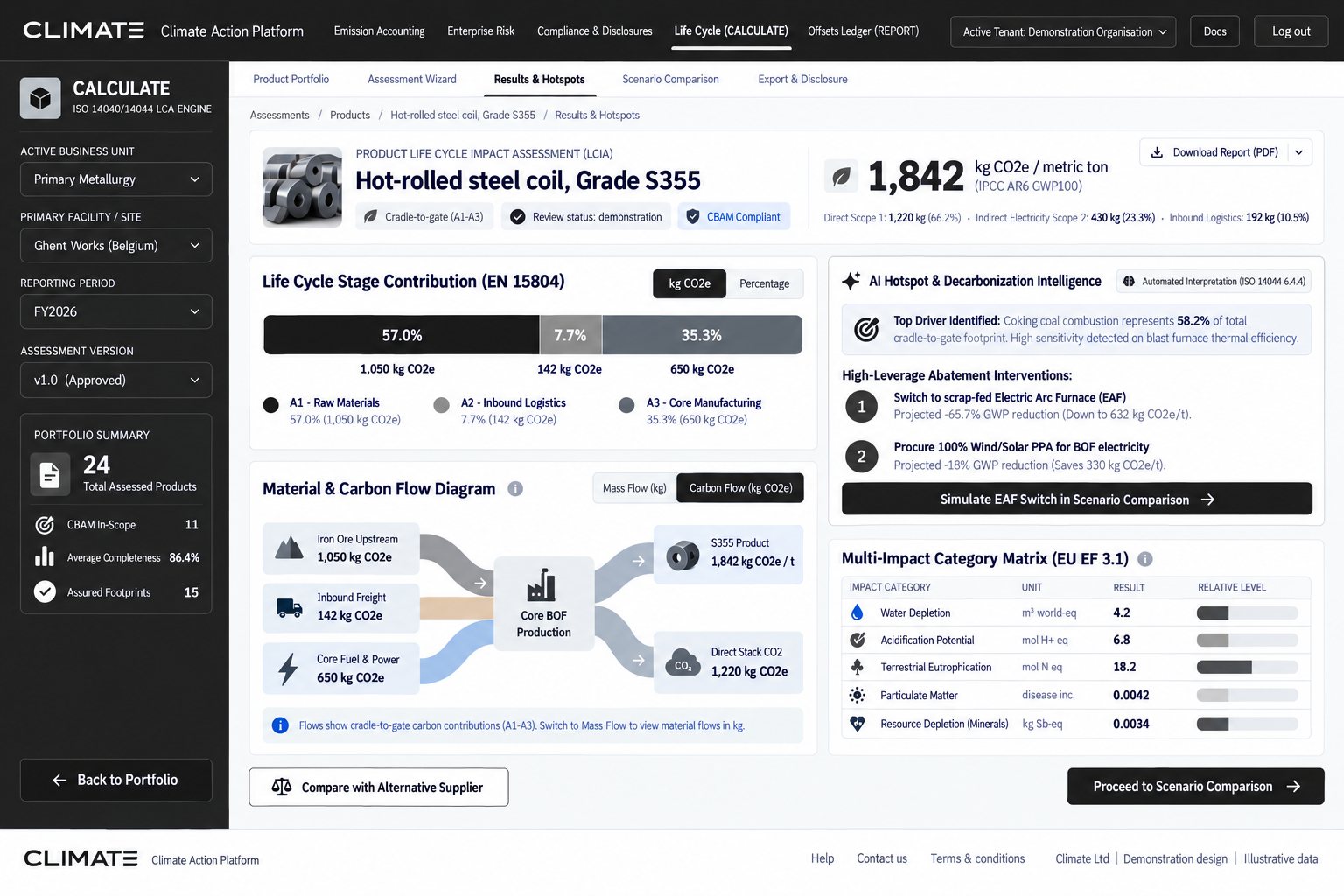
Life Cycle
Connect product footprints to activity data
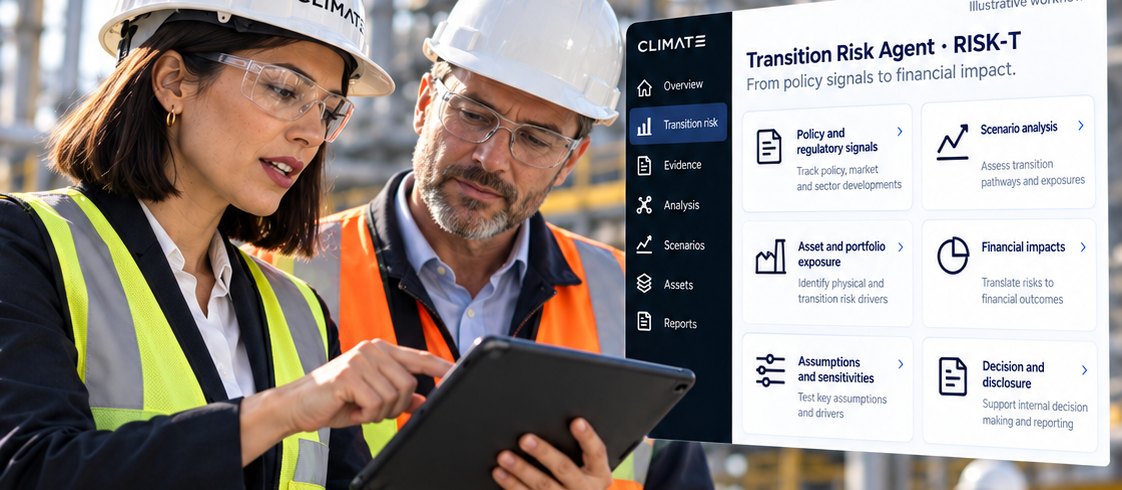
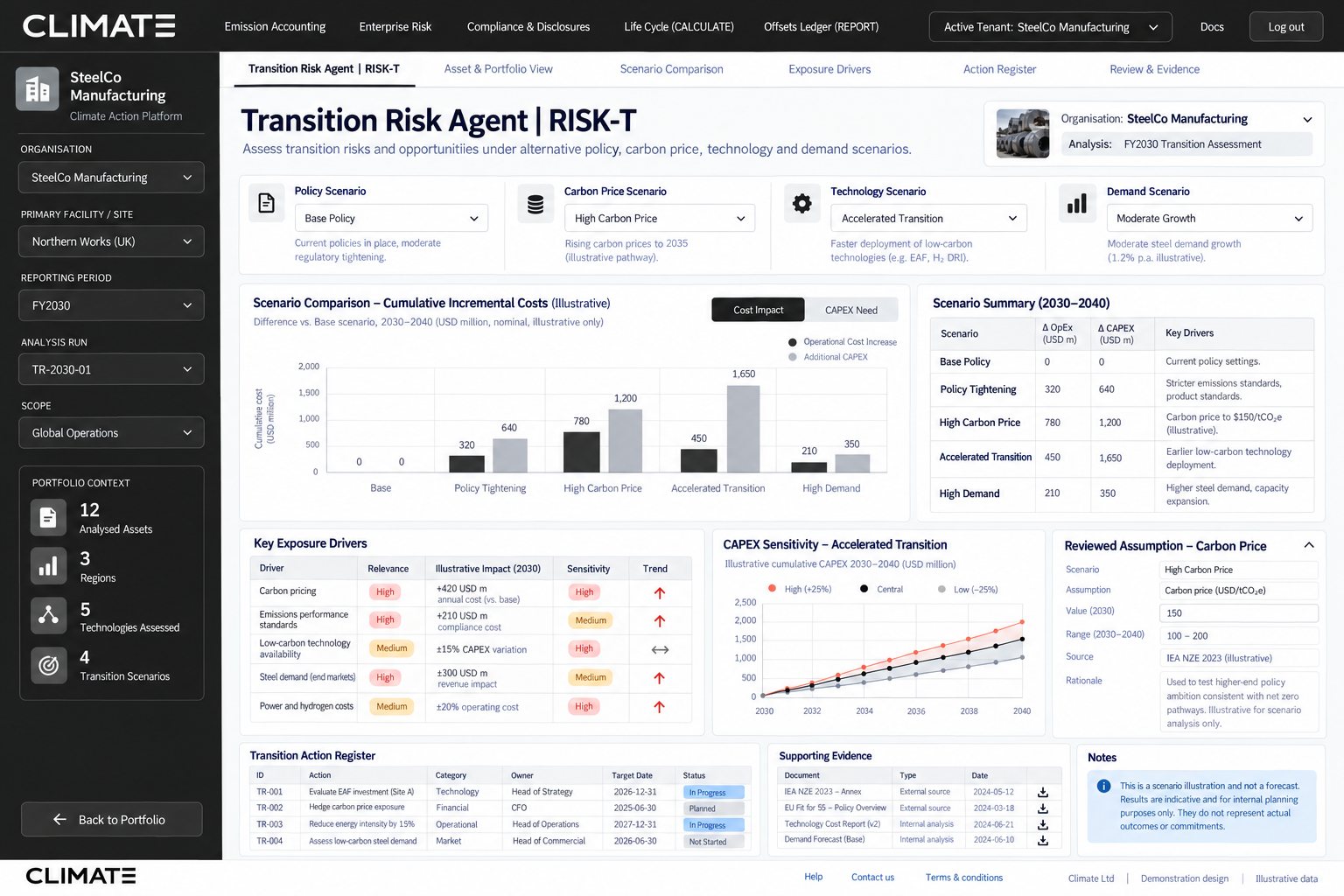
Transition Risk
Translate transition exposure into decisions
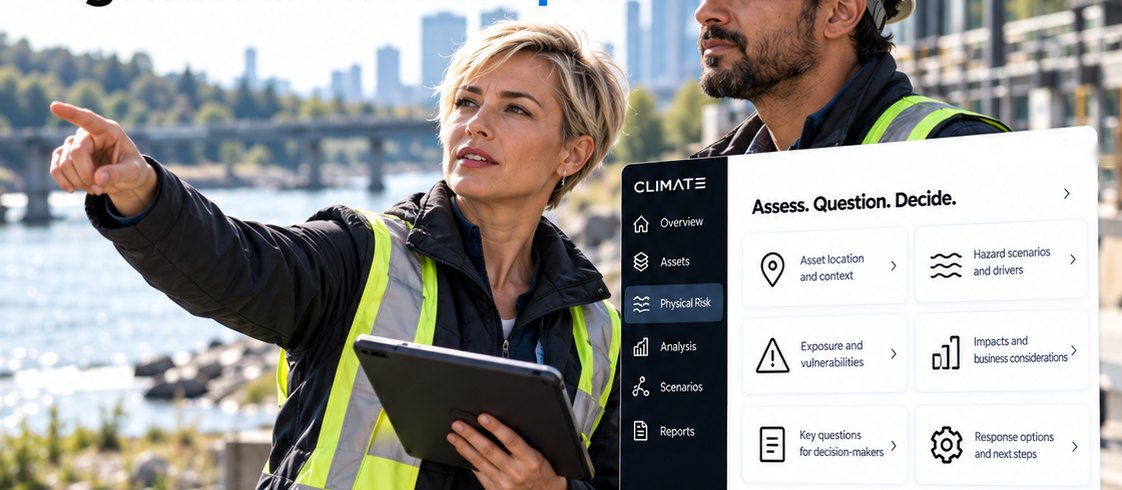
Physical Risk
Connect local hazards with asset decisions

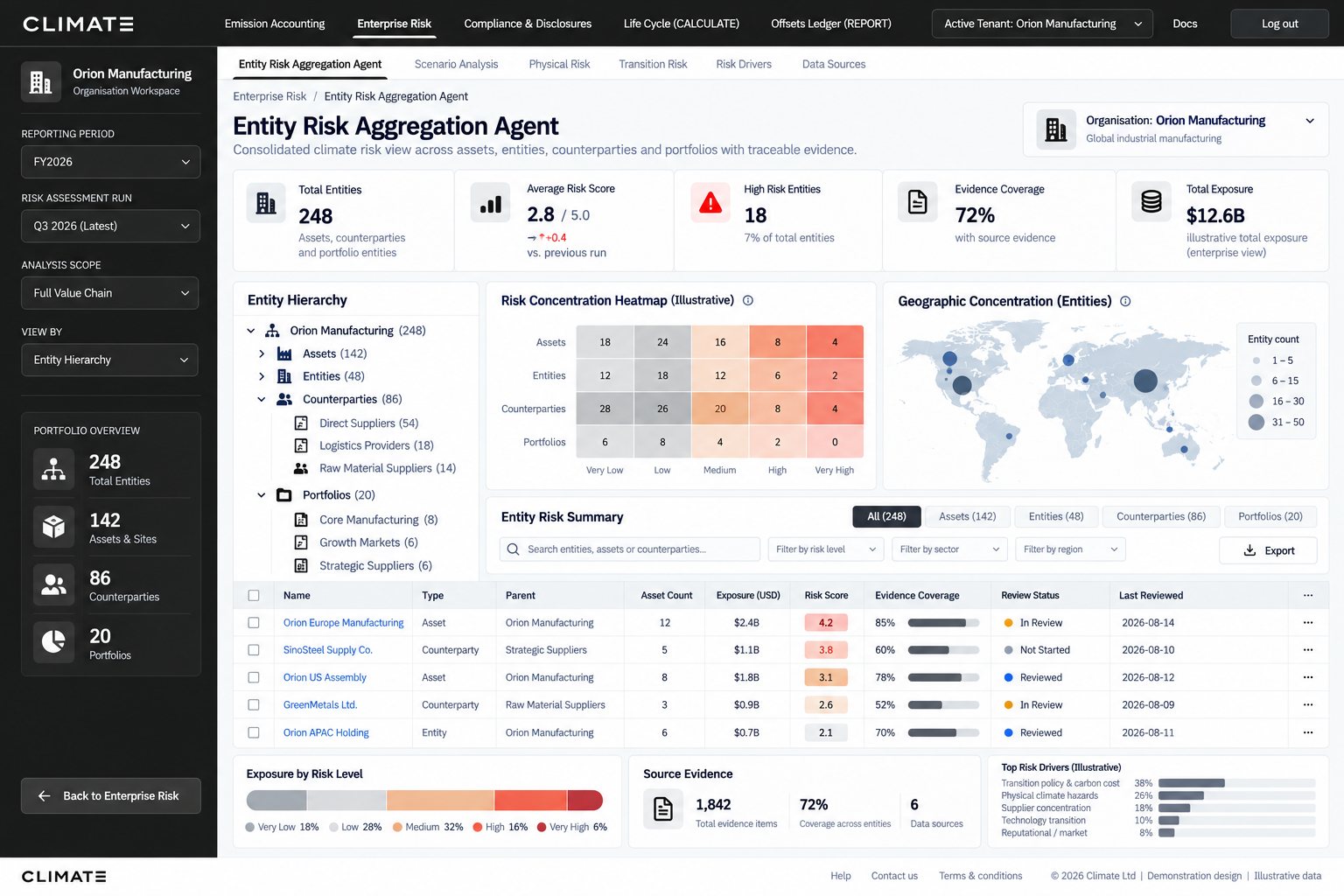
Entity Risk Aggregation
See exposure across the whole portfolio
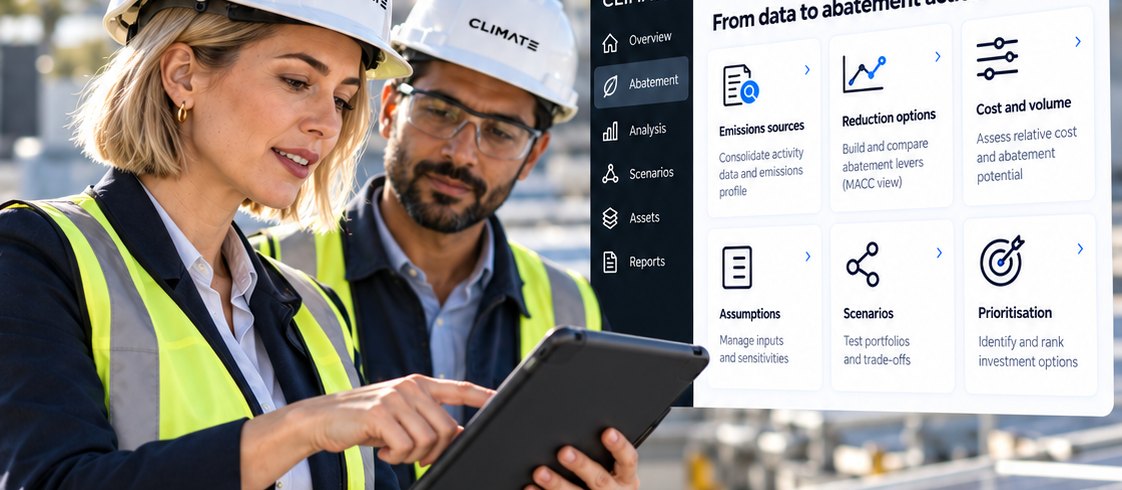
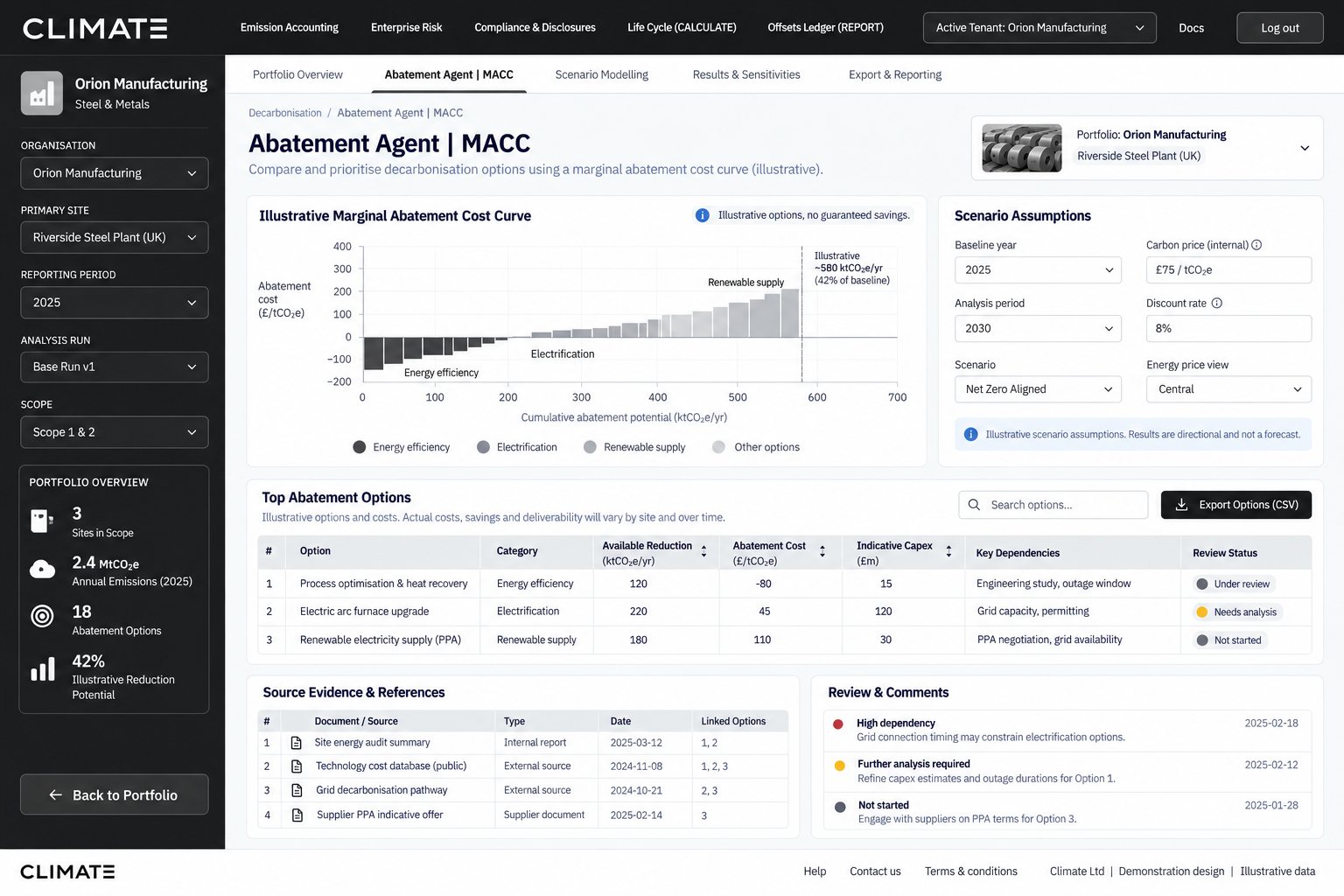
Abatement
Compare the economics of reduction options
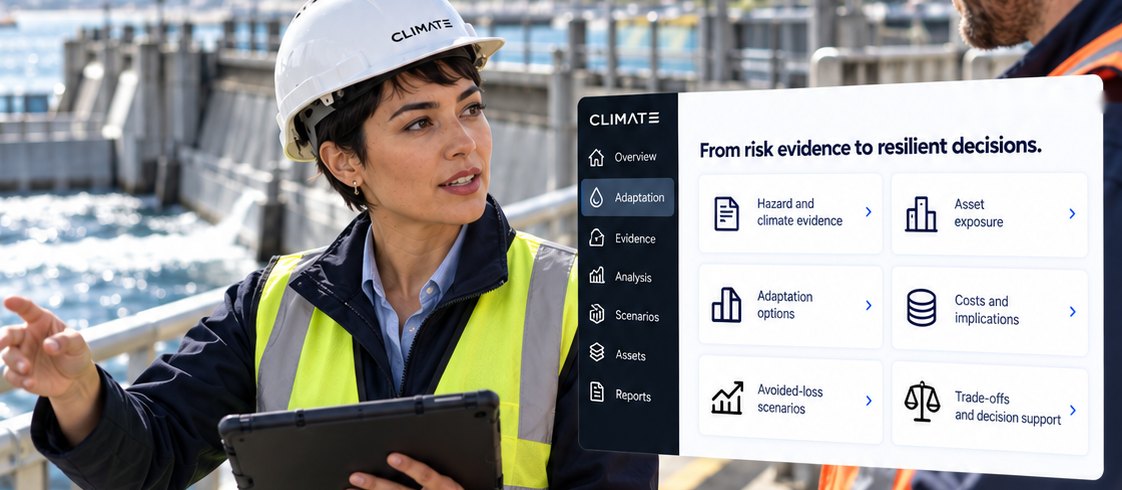
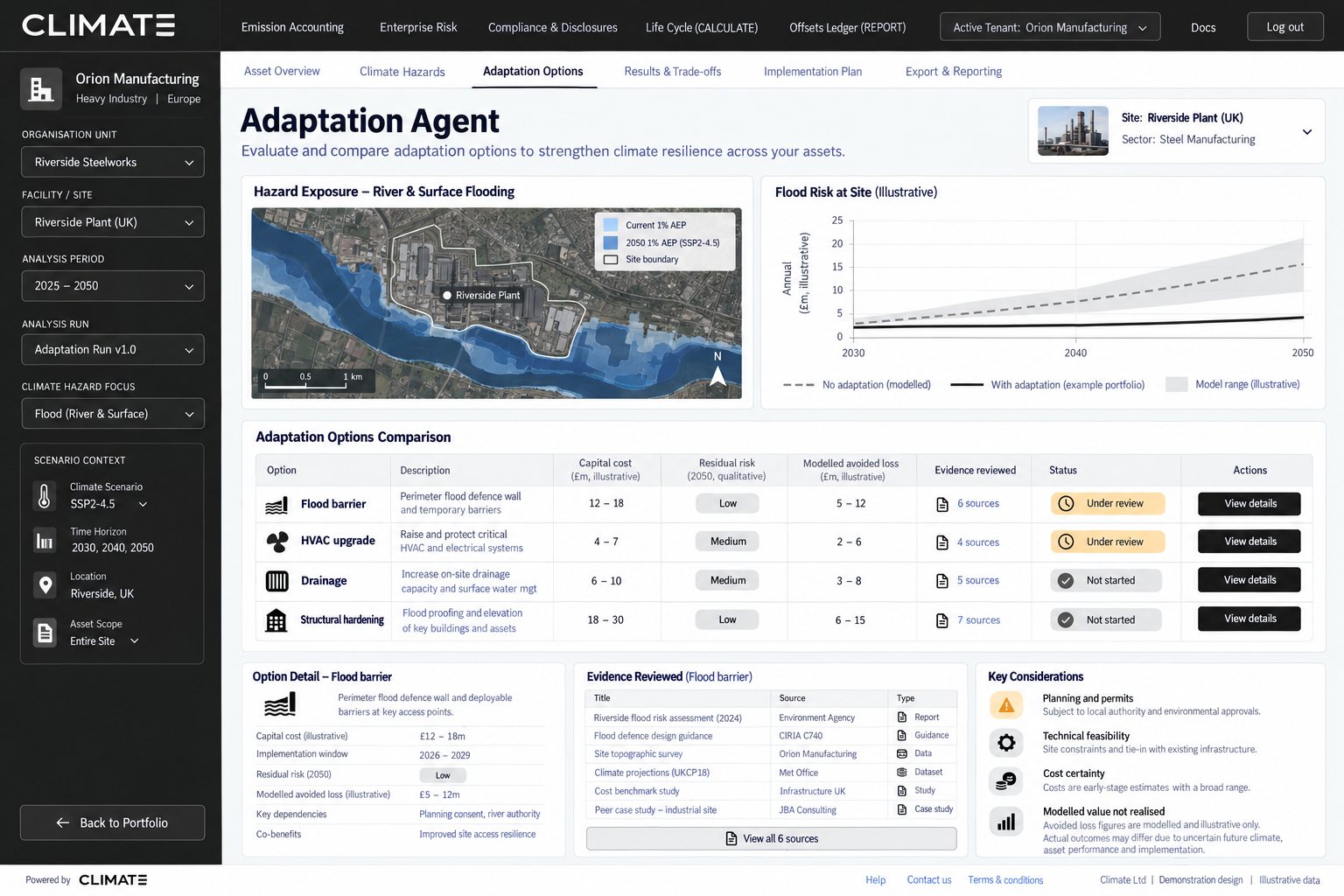
Adaptation
Assess the value of resilience measures
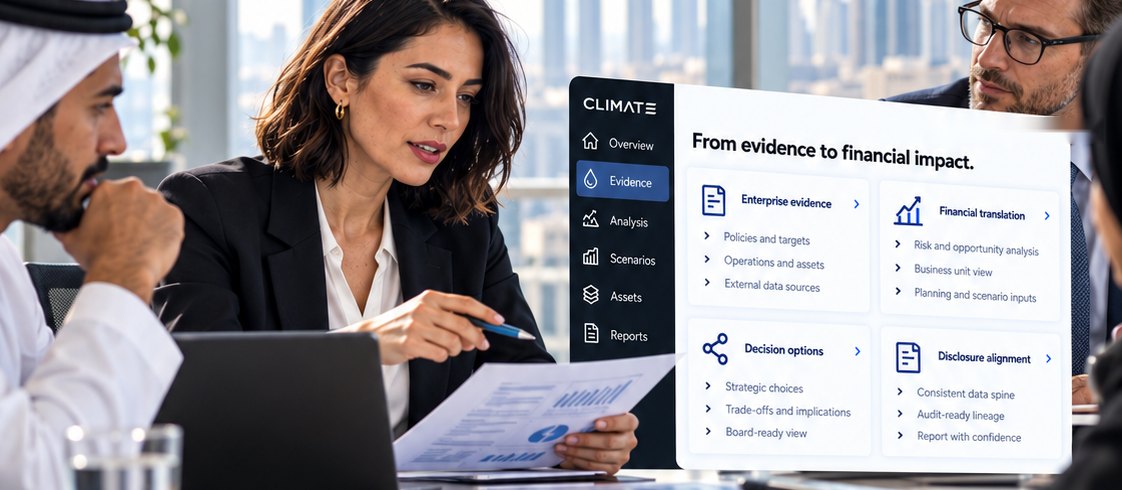
Financial Impact
Bring climate into financial decisions
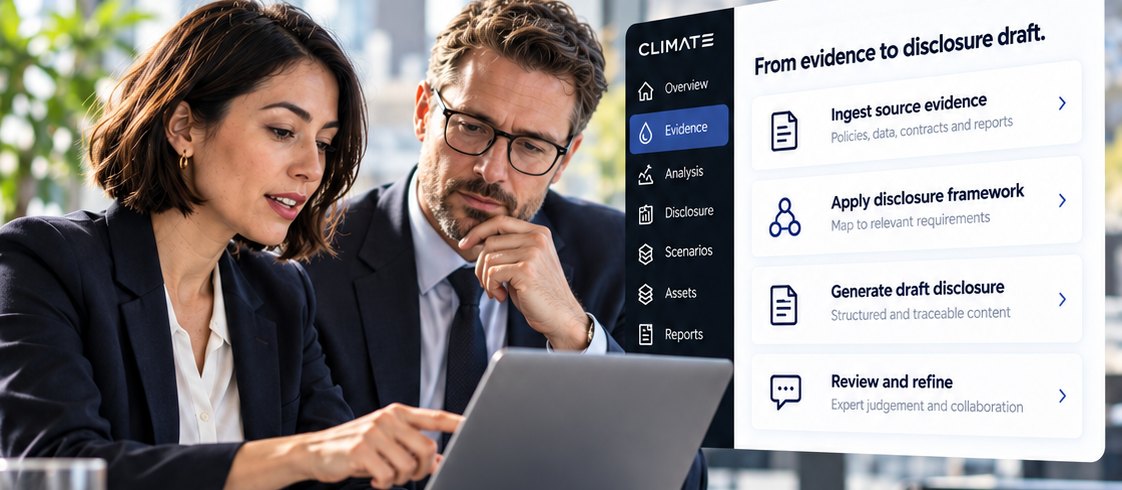
Disclosure
Prepare reporting from the shared evidence
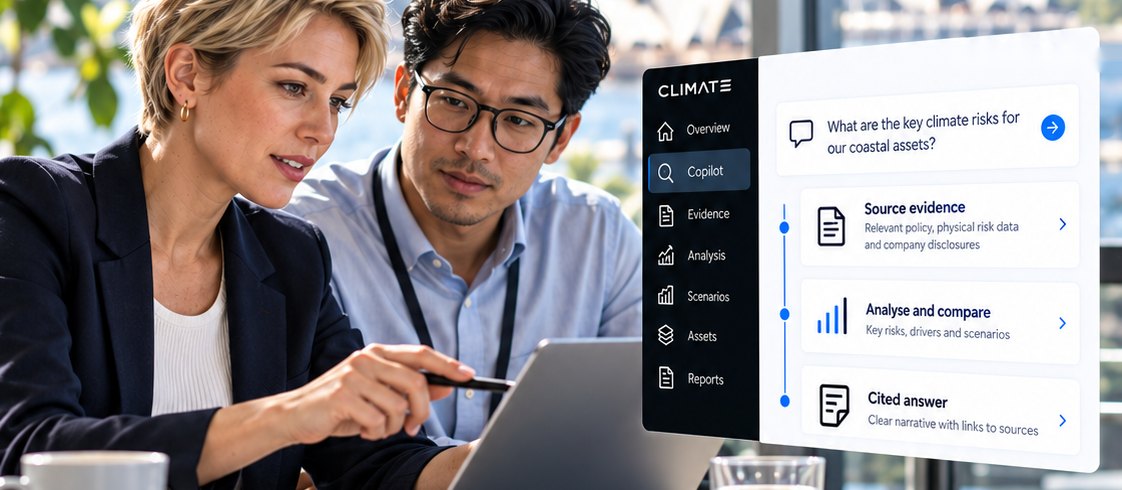
Climate Copilot
Ask the question and inspect the source
How Climate Ltd benefits your sector.
Every sector has its own pressures, regulators and decisions. Pick yours to see the problem, the agents that apply, the benefits and a sensible first workflow.
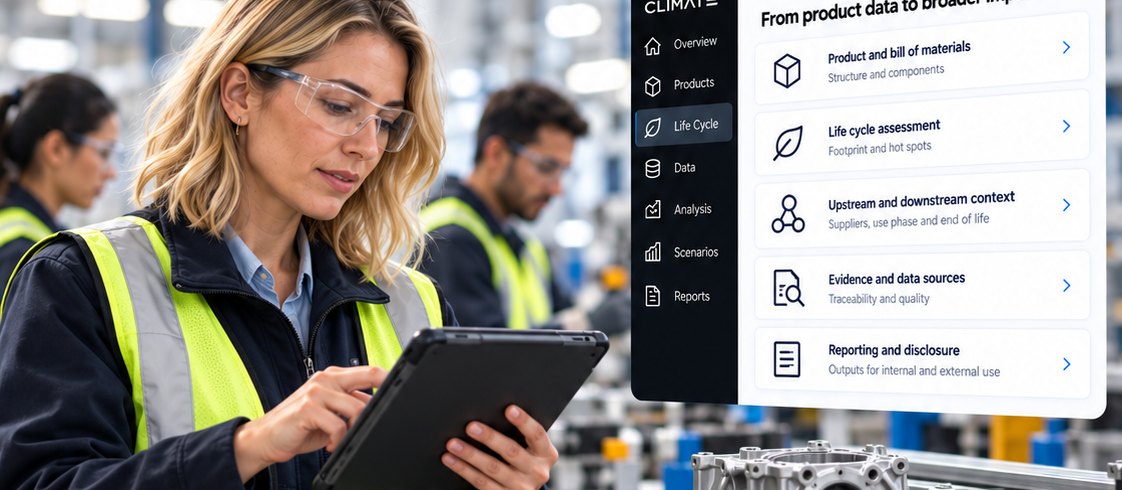
Manufacturing
Better-supported production and capital planning.
See the benefits →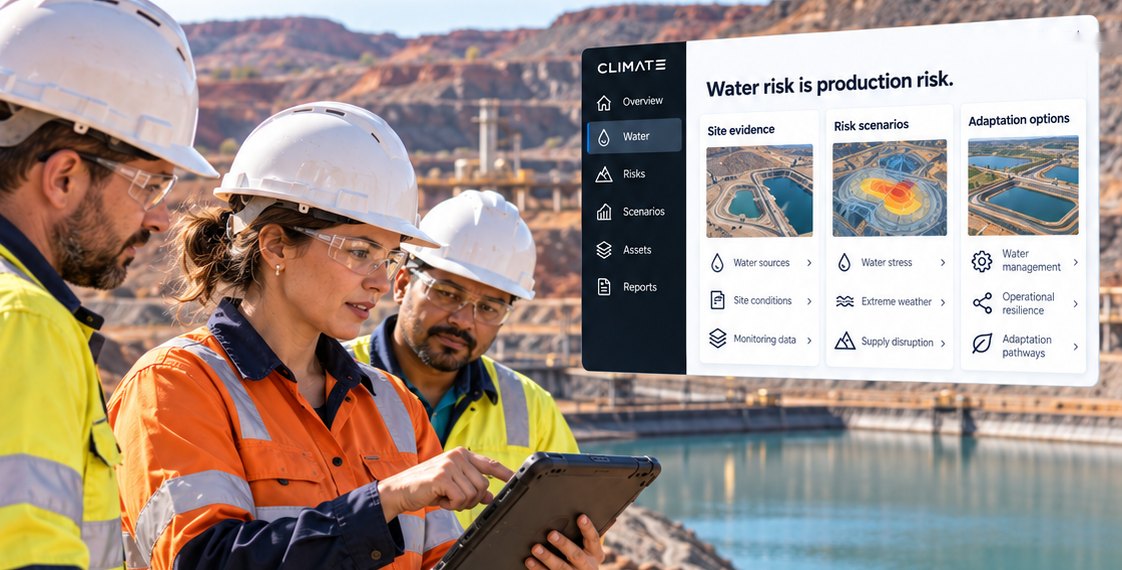
Mining
A clearer basis for operational and adaptation priorities.
See the benefits →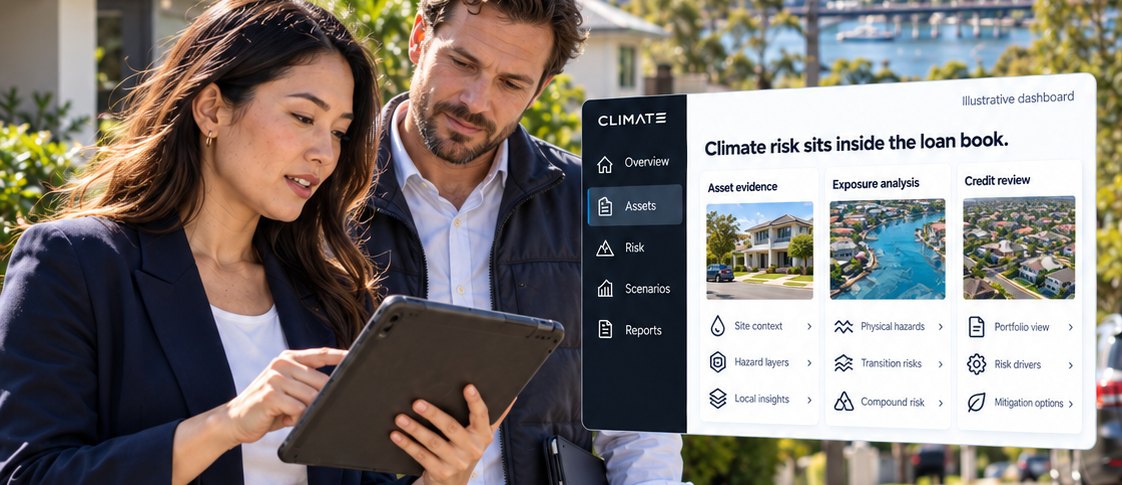
Banks
Better-informed questions and more transparent risk review.
See the benefits →
Insurance
Clearer underwriting and risk-management insight.
See the benefits →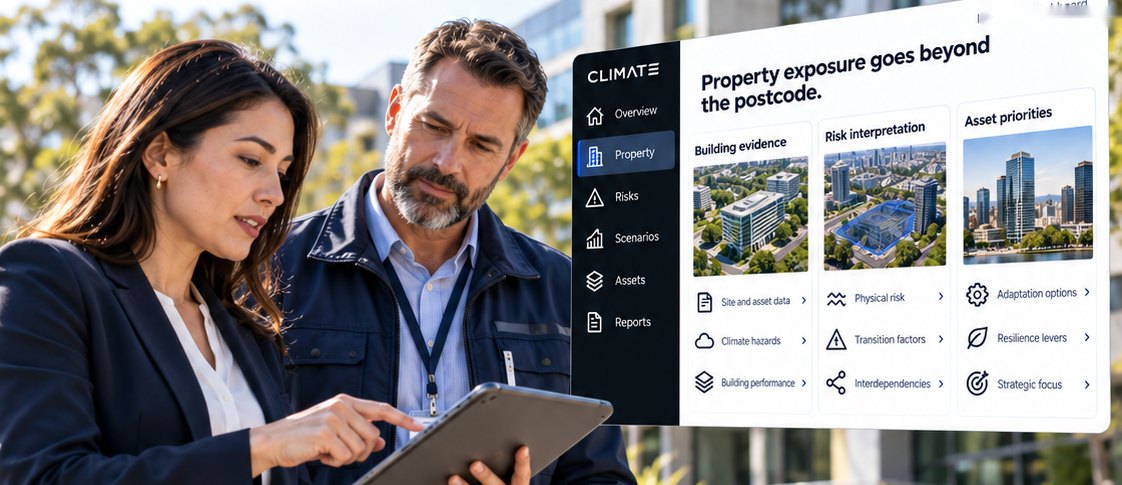
Real estate
Better-informed due diligence and investment prioritisation.
See the benefits →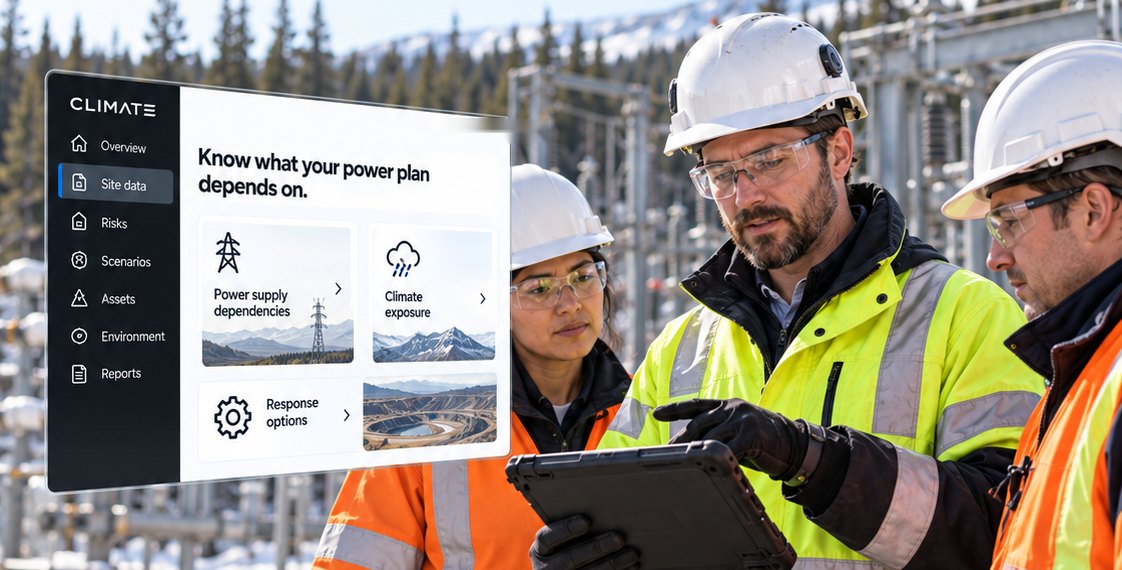
Energy and utilities
More transparent capital-priority discussions.
See the benefits →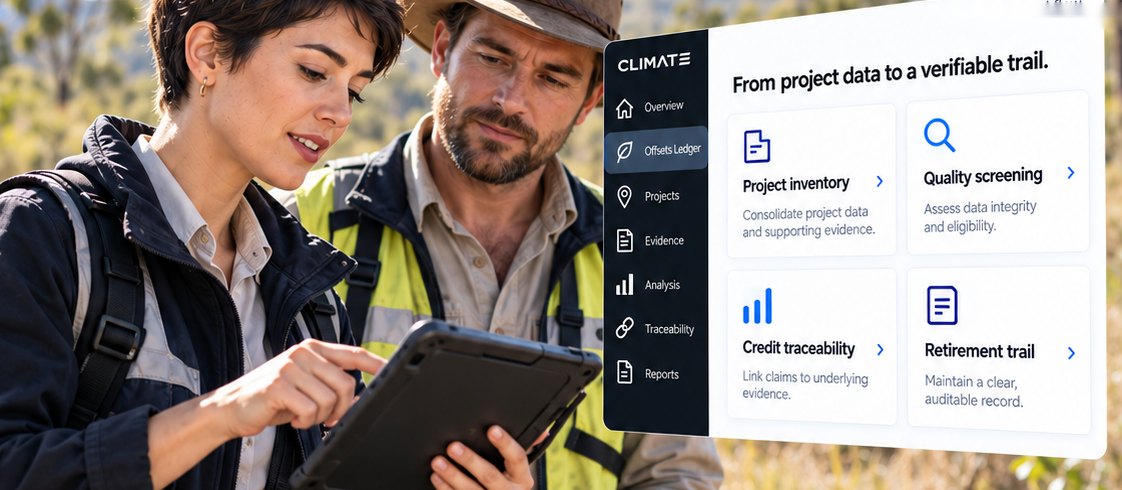
Agriculture
Better-supported planning across farms and the value chain.
See the benefits →
Government and public sector
Accountable investment and resilient services.
See the benefits →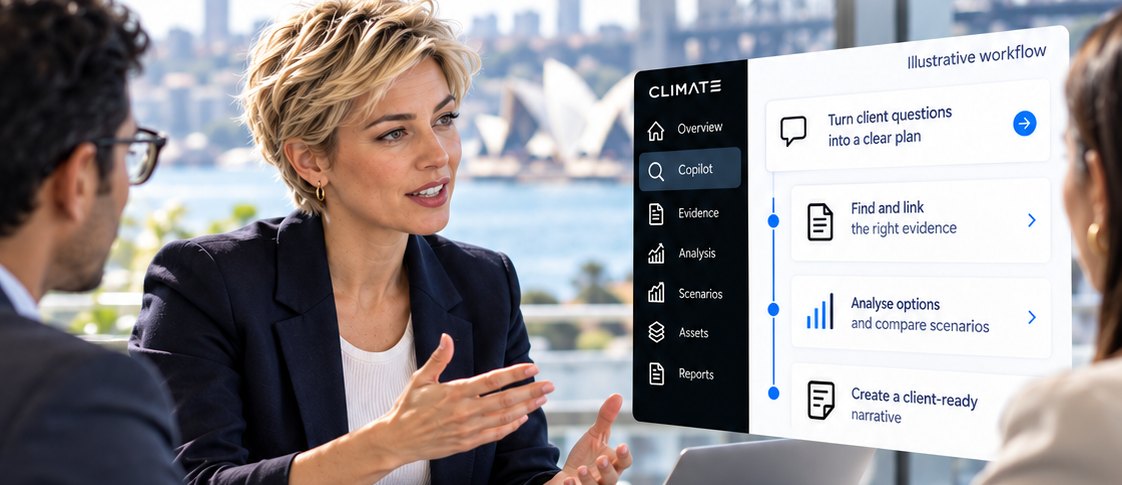
Consultants and advisers
A stronger delivery engine for expert advice.
See the benefits →Trace the answer back to the evidence.
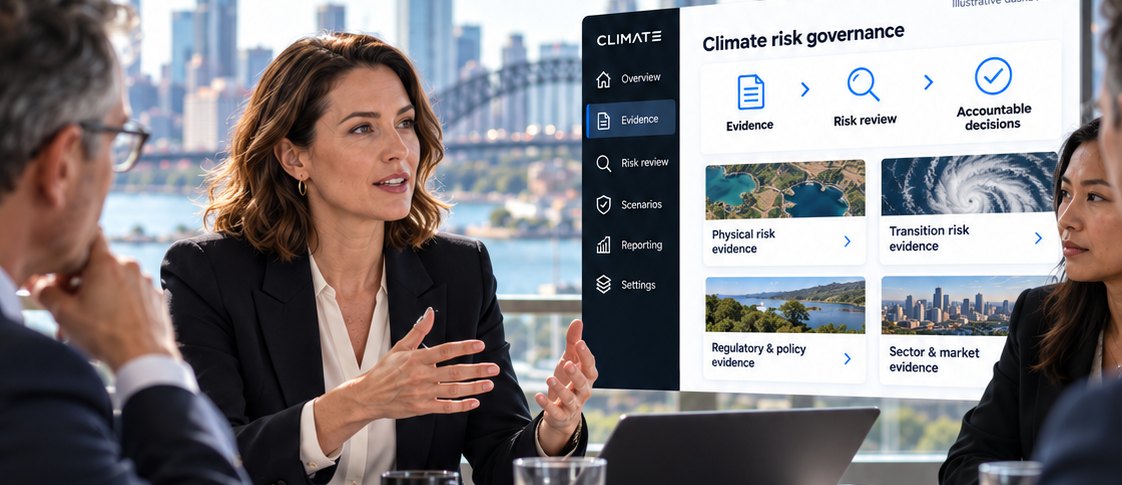
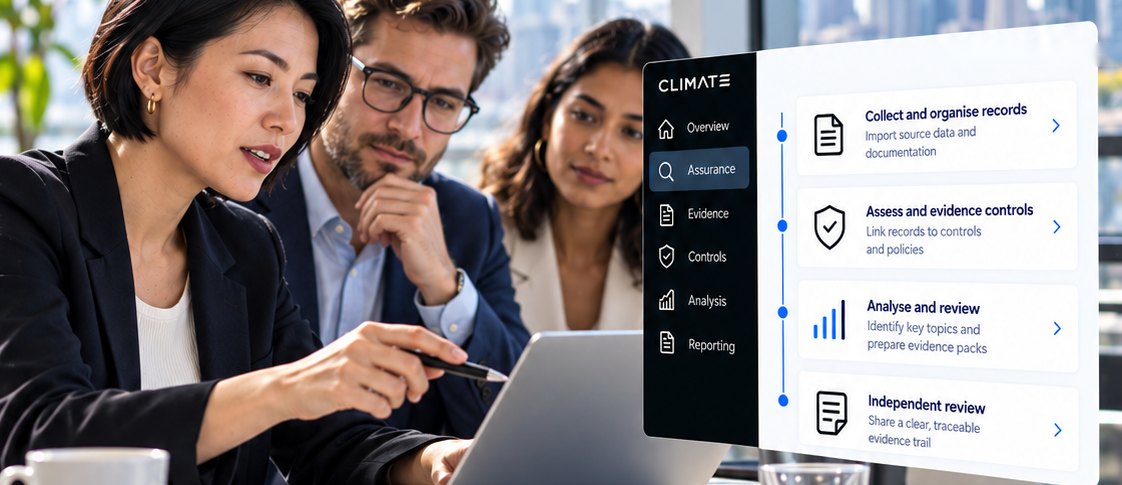
Source records, methods, factors, assumptions, scenarios and approvals stay connected. AI accelerates the work; authorised people remain accountable for material judgements.
Local reporting regimes. Shared evidence.
Keep one evidence base and assess each regime’s scope and methodology separately, from California SB 253 and UK SRS to AASB S2, ESRS, BRSR, OSFI B-15 and more.
Your expertise. A stronger delivery engine.
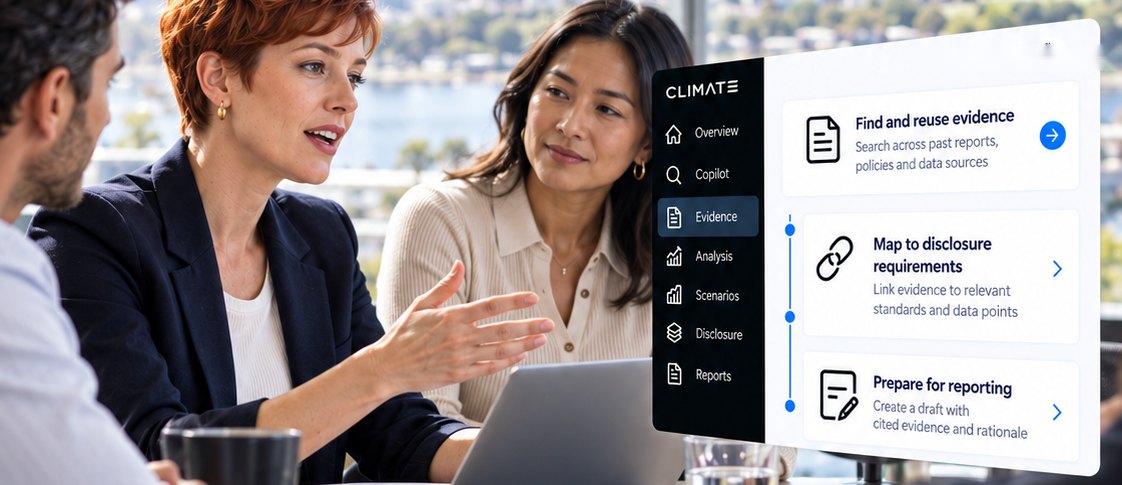
Reuse reviewed evidence, connect emissions, risk, nature, PCAF, water, finance and disclosure without stitching tools together, and keep client relationships and professional judgement where they belong: with you.
Become a delivery partner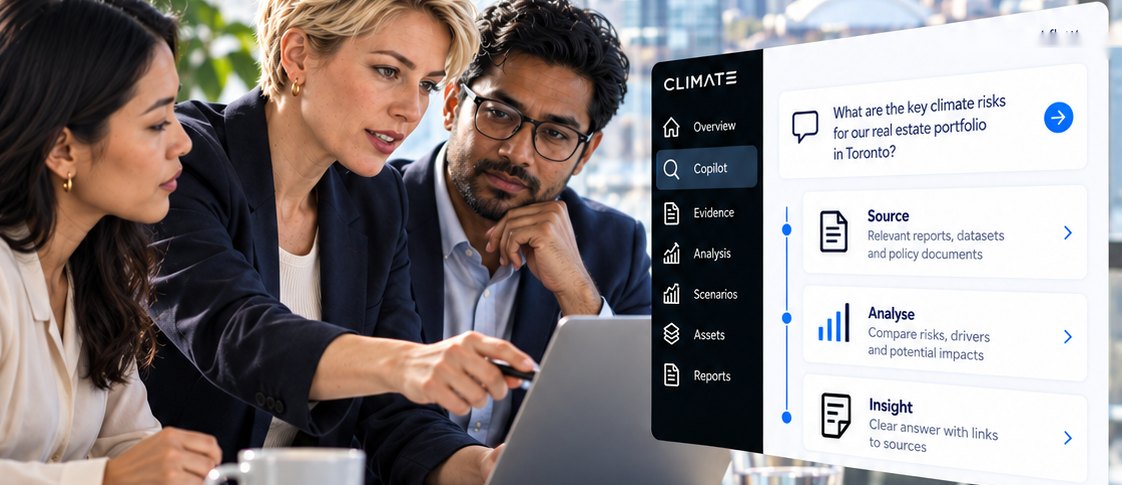
Bring one climate workflow. We will show how the agents connect it.
Start with an emissions inventory, a physical-risk assessment, a PCAF portfolio, a TNFD scope, a water-risk question, a disclosure programme or a client advisory workflow.
Request a demo